




In this post Show
Editorial Disclosure
Air New Zealand is offering something for passengers that no airline has ever done before.
Putting bunk beds on a plane. For economy passengers, no less.
The carrier’s long-awaited Skynest is nearly ready for takeoff.
In advance of the inaugural flight in November, Air New Zealand just took the wraps off the mockup — and here’s what it’s like inside.
What the Skynest looks like
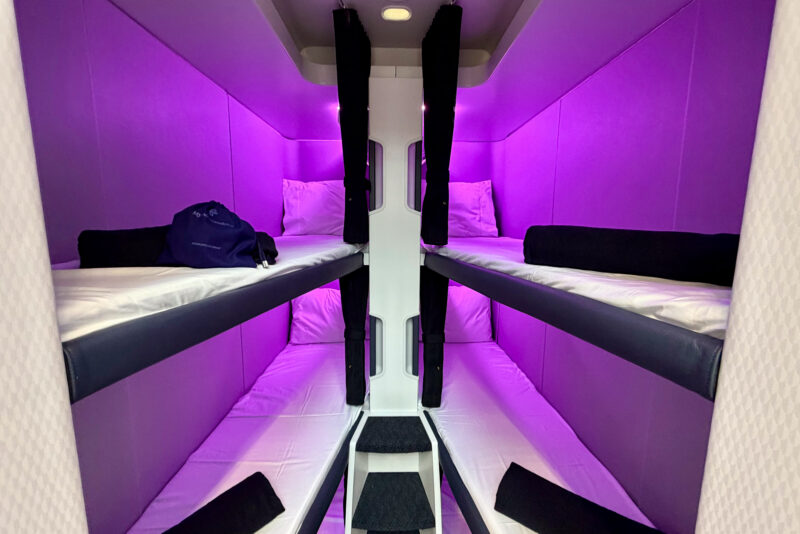
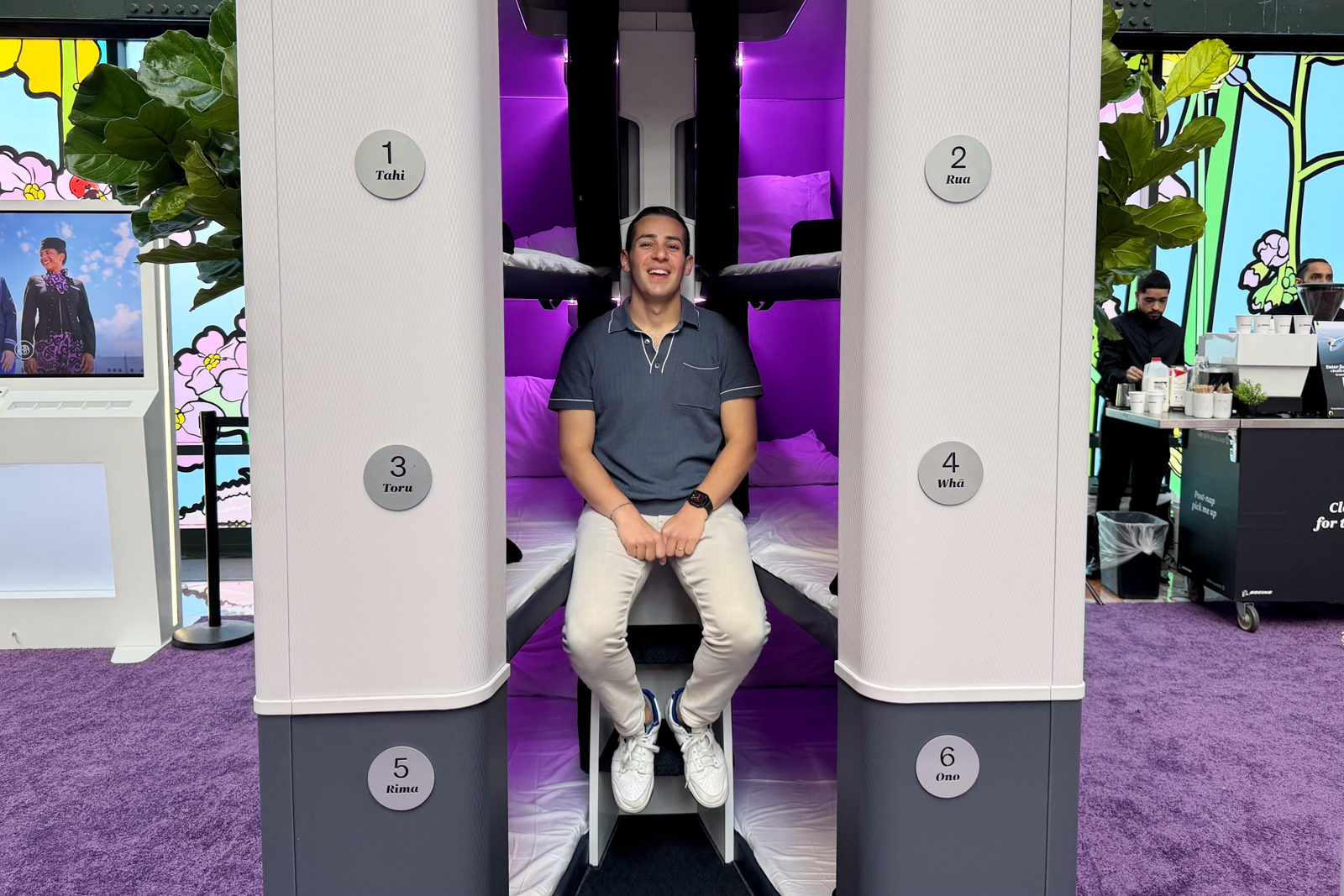
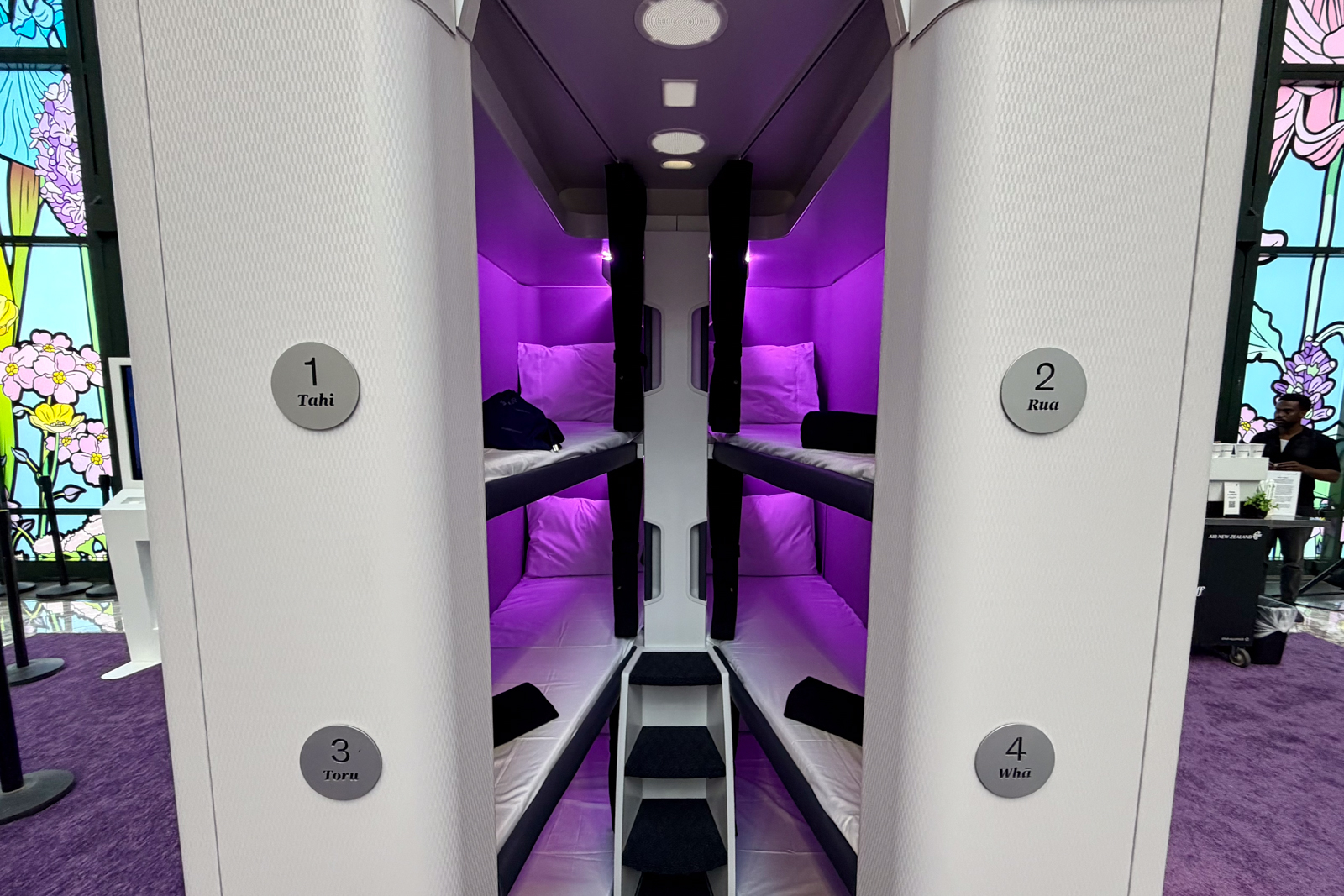
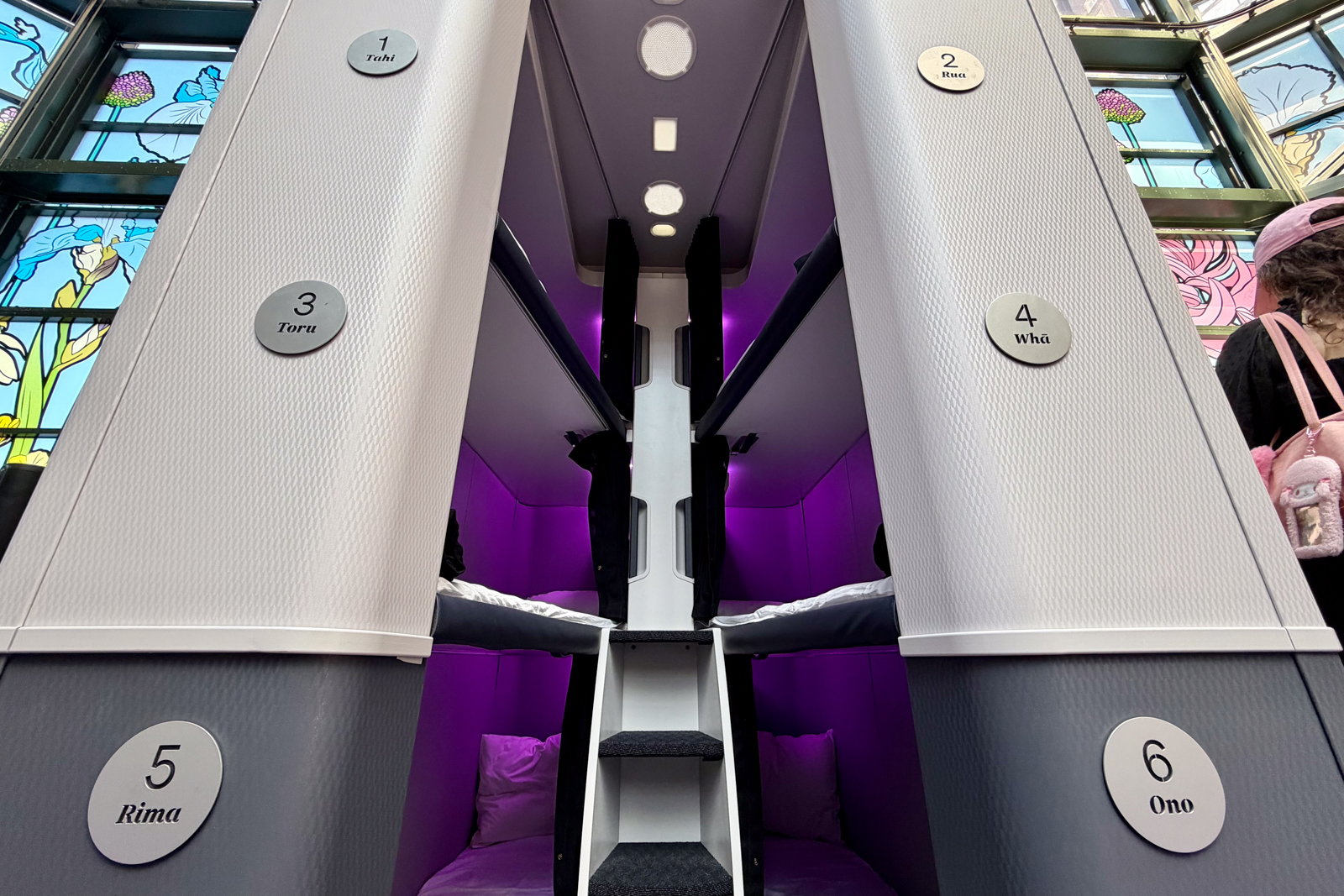
The Skynest comprises six lie-flat sleep pods wedged in the galley between premium economy and economy on the Boeing 787 Dreamliner.
(This isn’t just any Dreamliner. It’s the first with a higher maximum takeoff weight that makes ultra-long-haul missions more economical.)
At first glance, the Skynest looks like a Japanese capsule hotel at 35,000 feet.
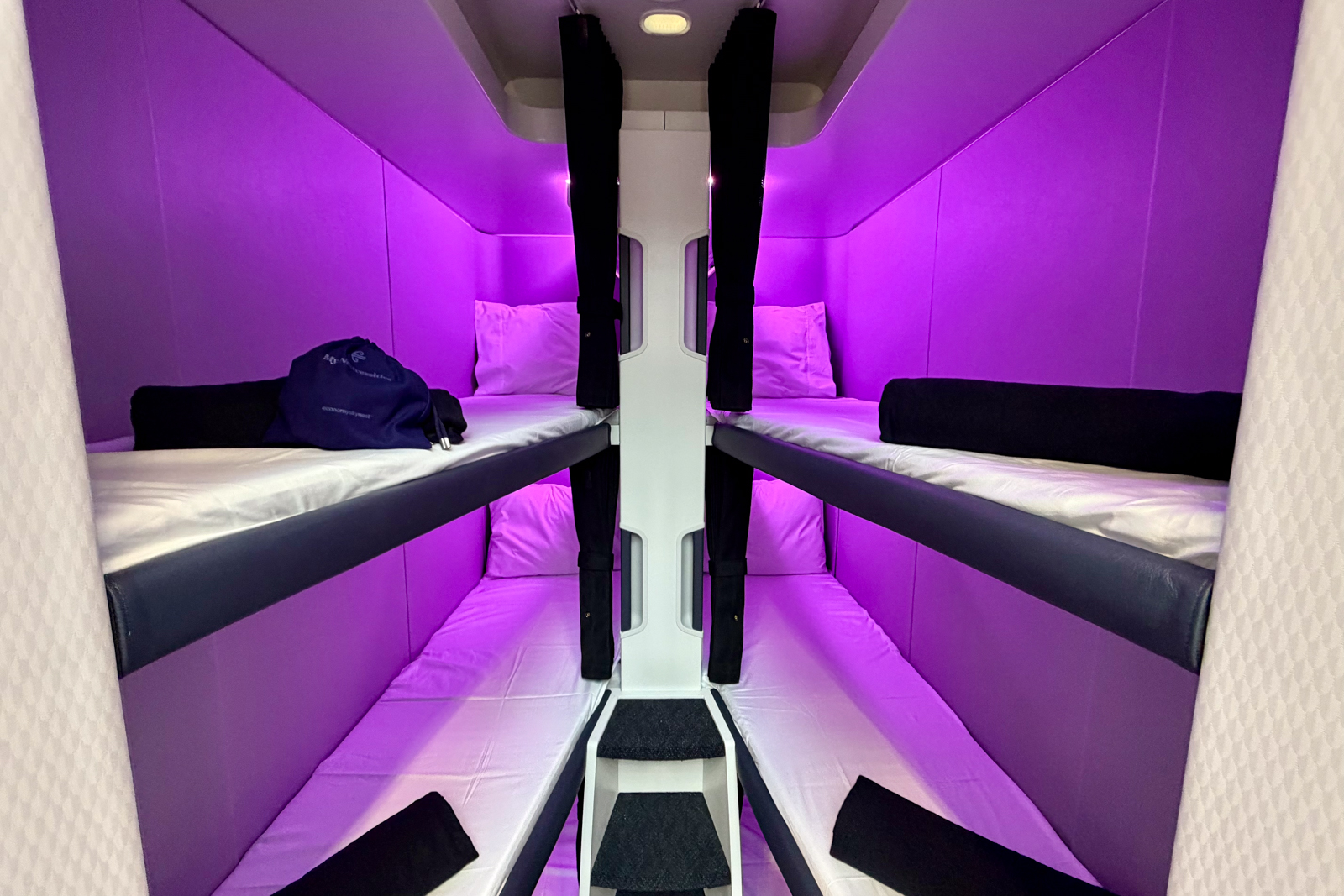
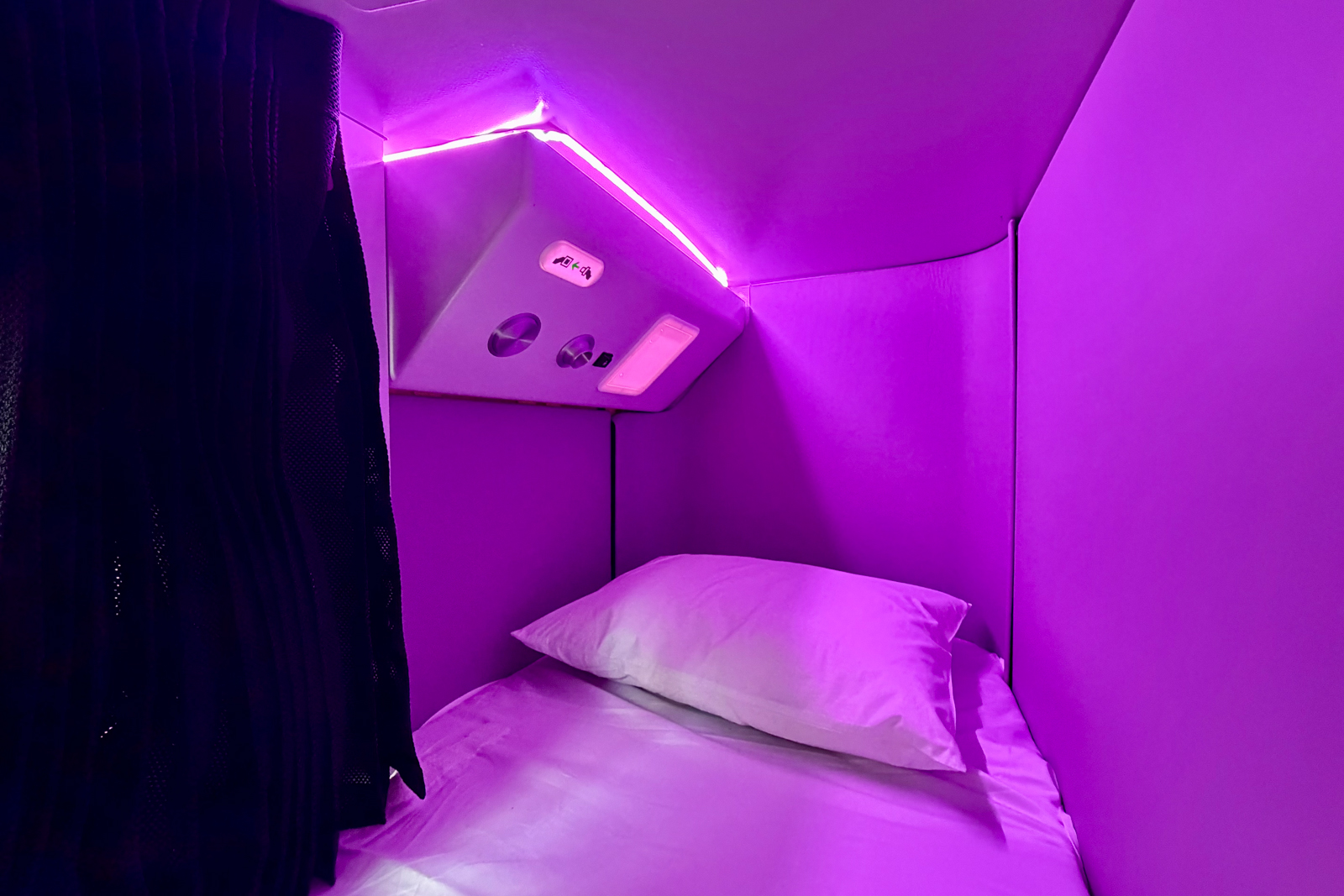
Each pod measures about 6.6 feet long and 25 inches wide at the shoulder, tapering to about 16 inches at the feet. It’s tight — just one passenger is allowed in at a time — but it is a fully lie-flat bed.
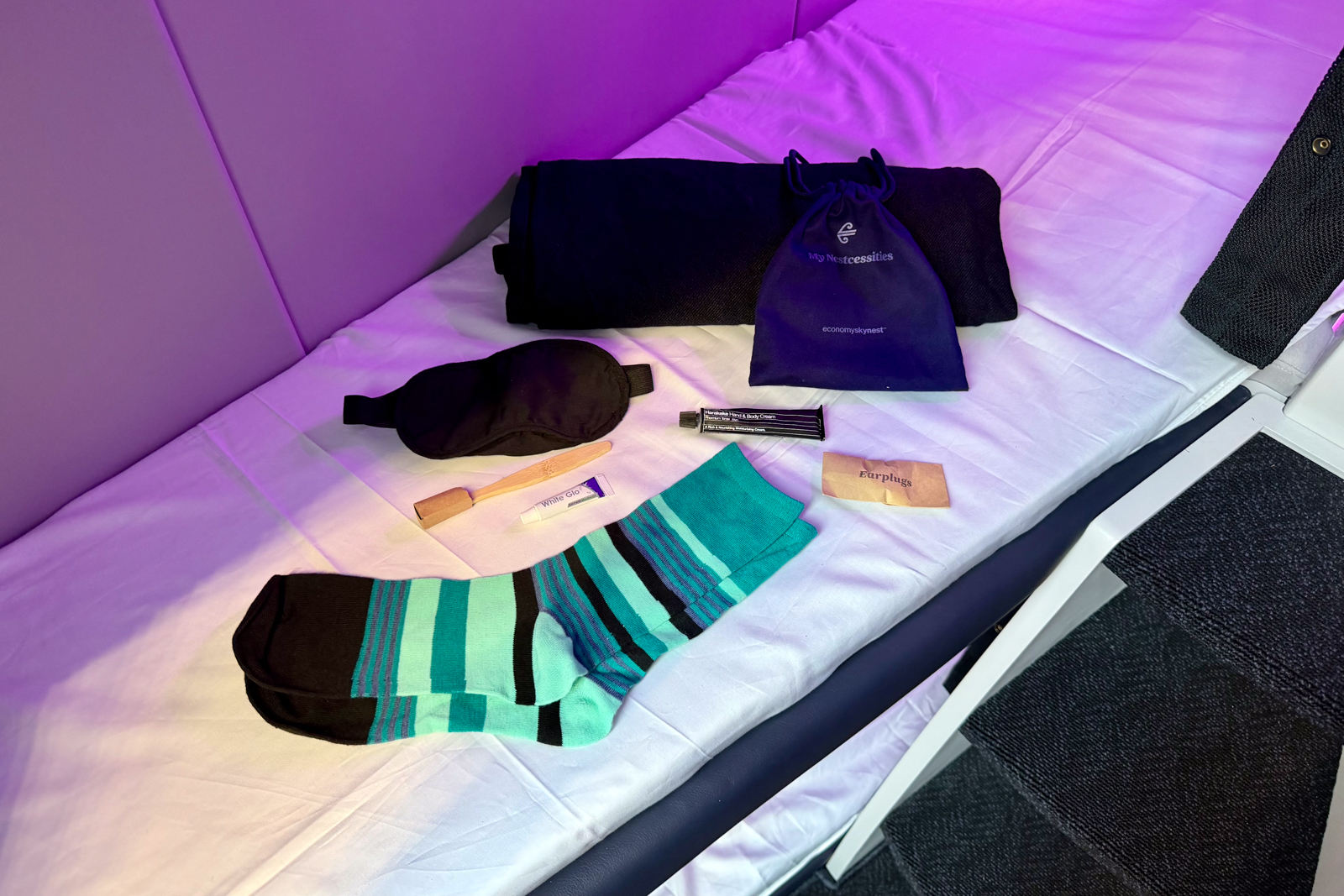
Each pod comes with a full-size pillow, a fitted sheet, a blanket (not quite as soft as the duvets in business), and a Nestcessities amenity kit stocked with an eye mask, earplugs, socks, a toothbrush, and hand cream.
Note that socks are required in the Skynest — shoes can’t be worn inside.
Choosing a bunk
The six beds are nearly identical. The only real difference is the location. There are three tiers:
- The bottom pods sit just 4 inches off the floor. I basically needed to crawl in.
- The middle tier is about 3 feet up — and the easiest to get in and out of.
- The top bunks are over 5 feet off the ground and require a small ladder.
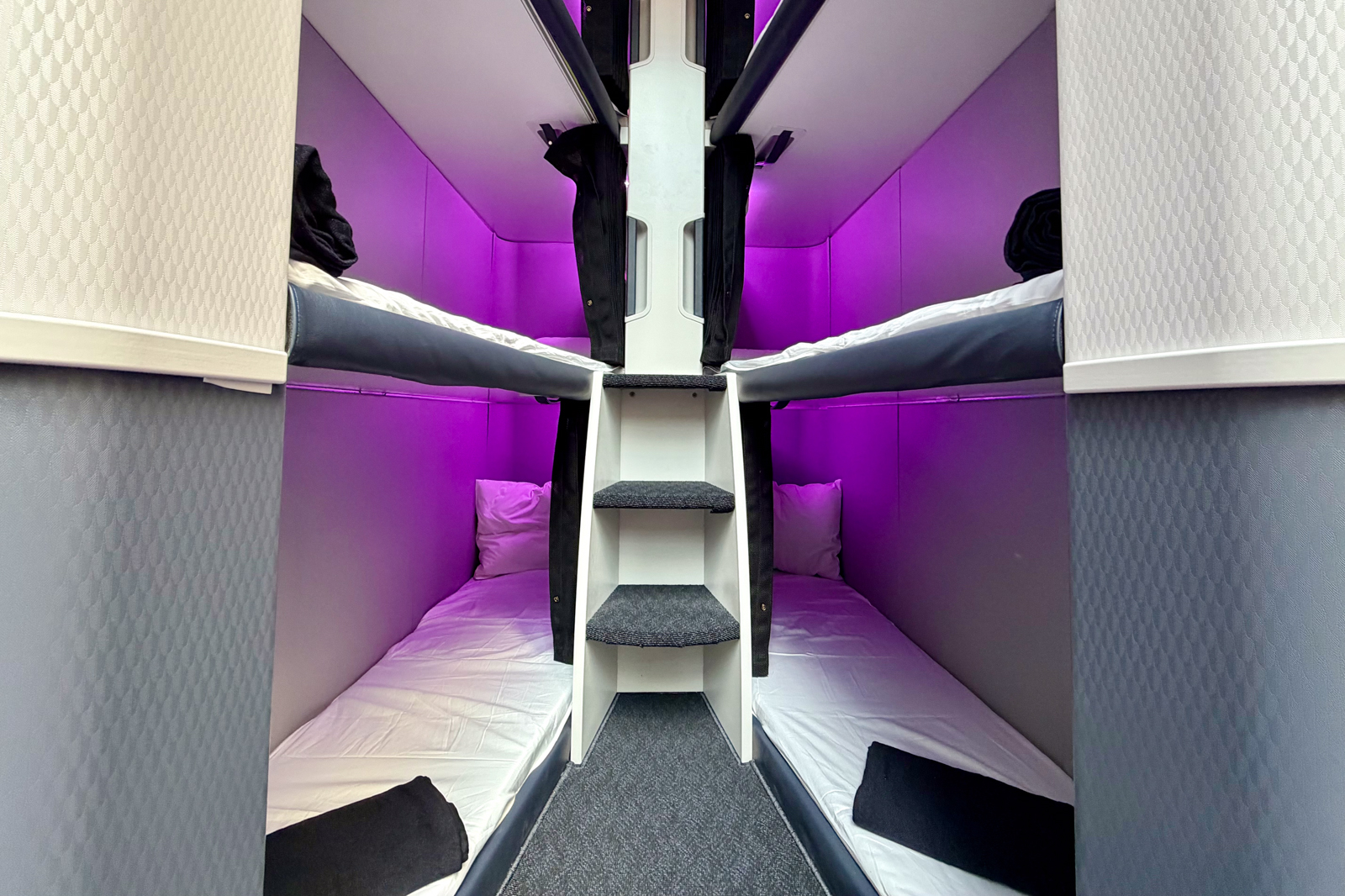
When you reserve a Skynest, you can pick which bunk you want. I’d suggest the middle or top berths.
Note that children under 15 are not allowed, and you need to be able to get in and out independently.
Inside the pod
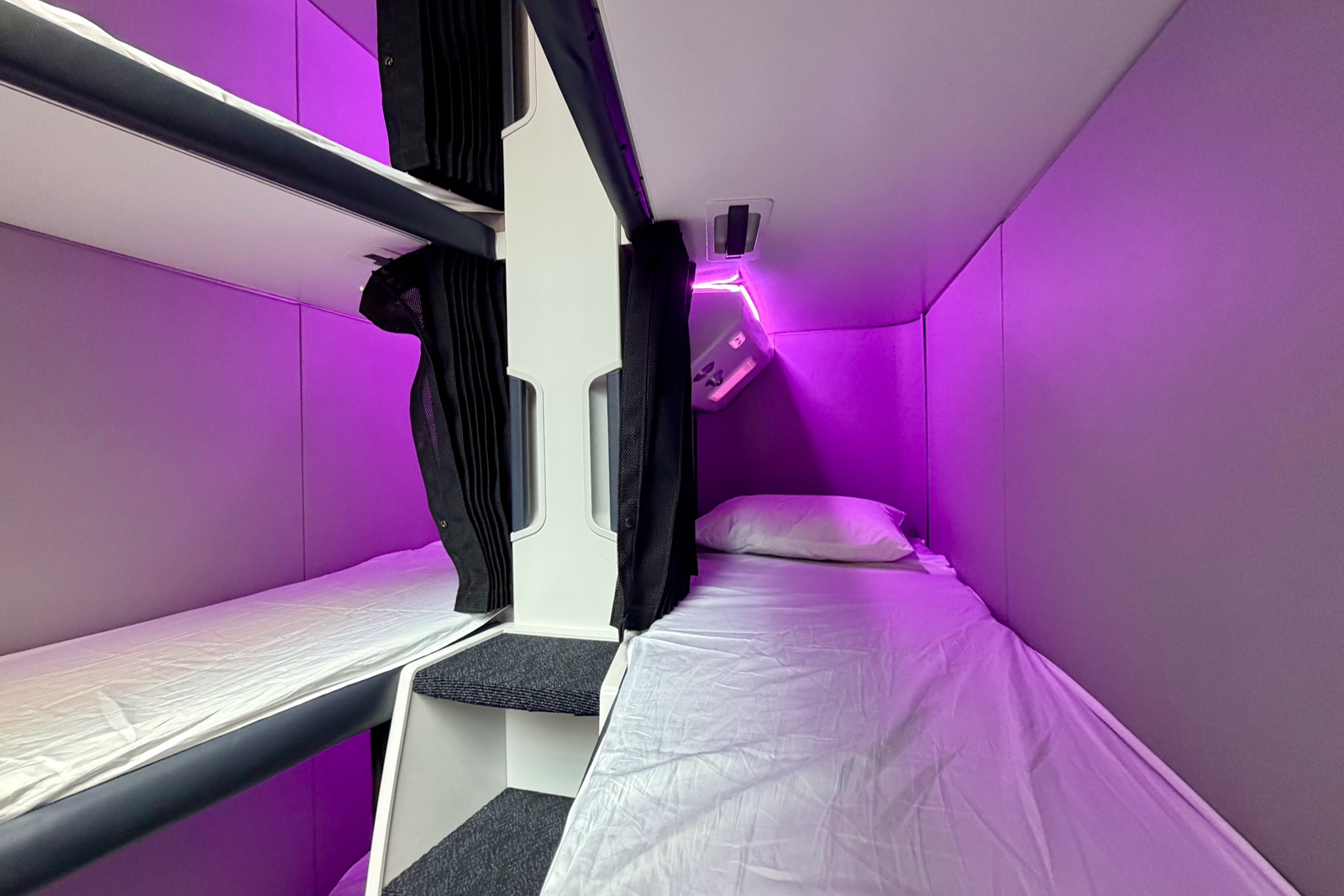
Once you’re inside, the pods are surprisingly comfortable.

Subscribe to the newsletter
Get the front-row look at the evolving world of travel, loyalty, tech and lifestyle — delivered directly to your inbox.
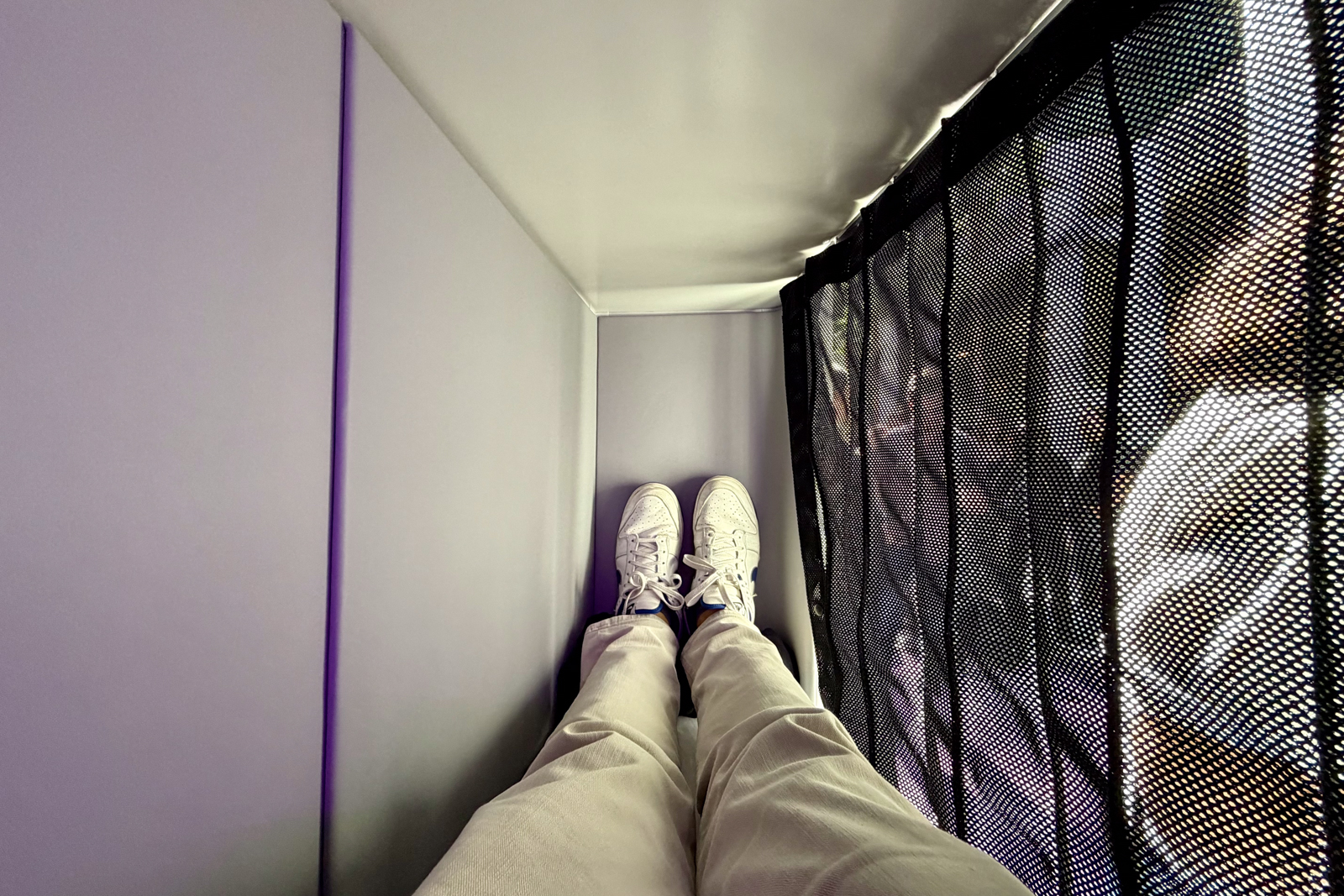
There’s enough length for most people to fully stretch out. A privacy curtain separates you from the aisle, though it’s fairly see-through — you’ll want that eye mask.
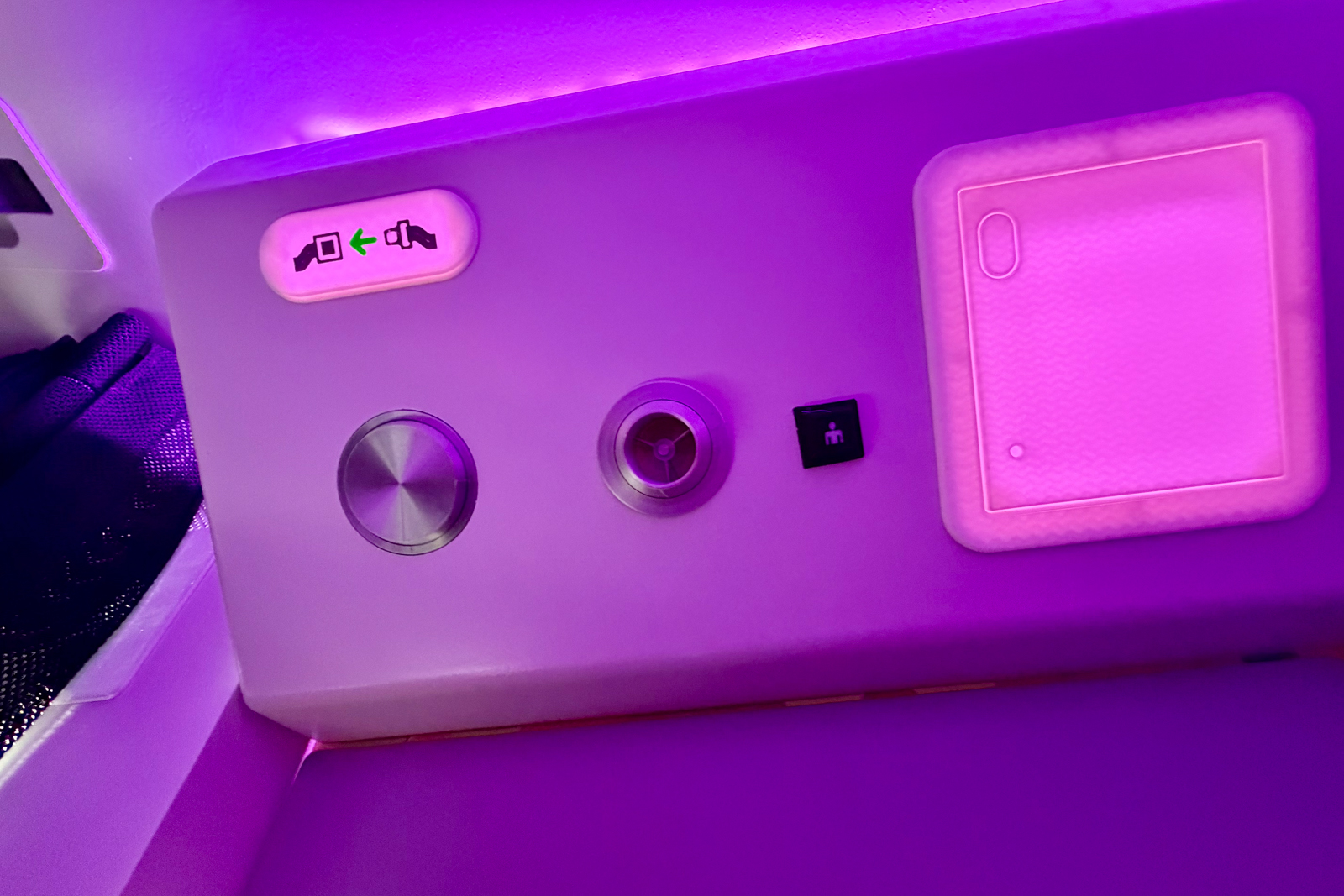
In terms of amenities, there are USB-A and USB-C charging ports, a reading light, an air vent, an oxygen mask, and a seat belt. You aren’t allowed to eat or drink anything but water (there is a water bottle holder).
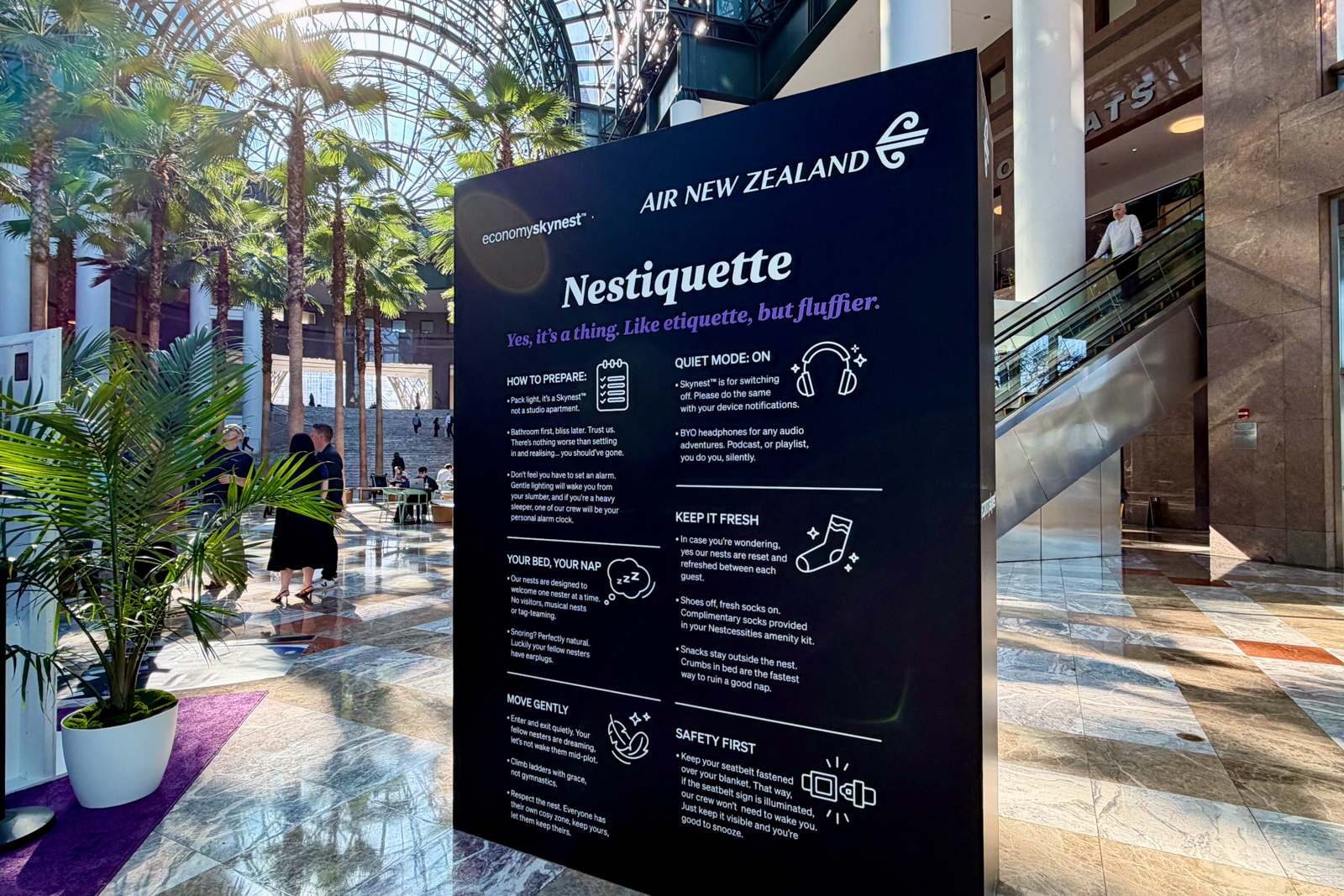
One thing to keep in mind: the Skynest is located in the galley, right next to four lavatories. You’ll likely hear — and smell — things from the galley area.
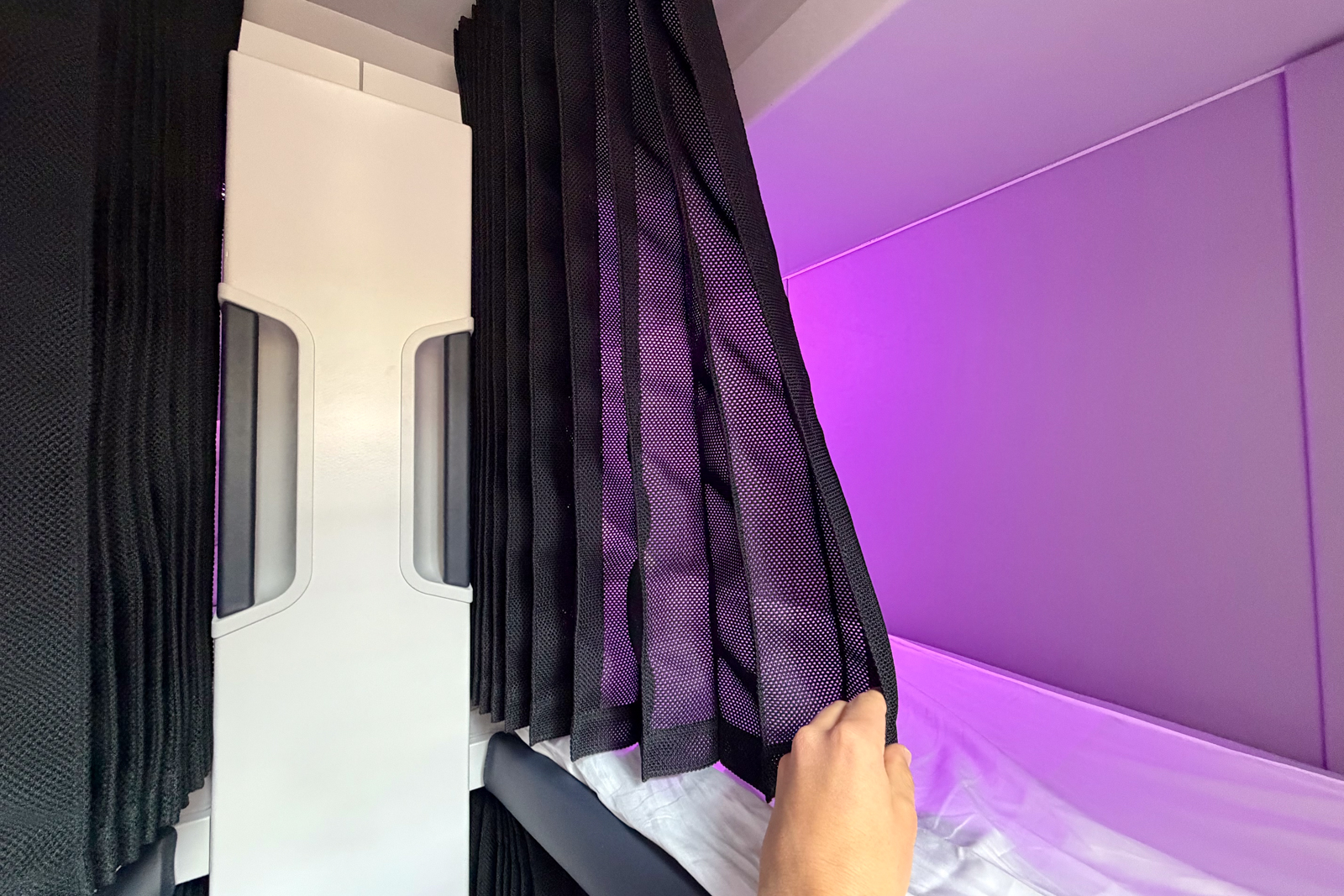
The Skynest doesn’t have a sliding door or any sort of enclosure for added privacy. Maybe a next-generation version could incorporate that.
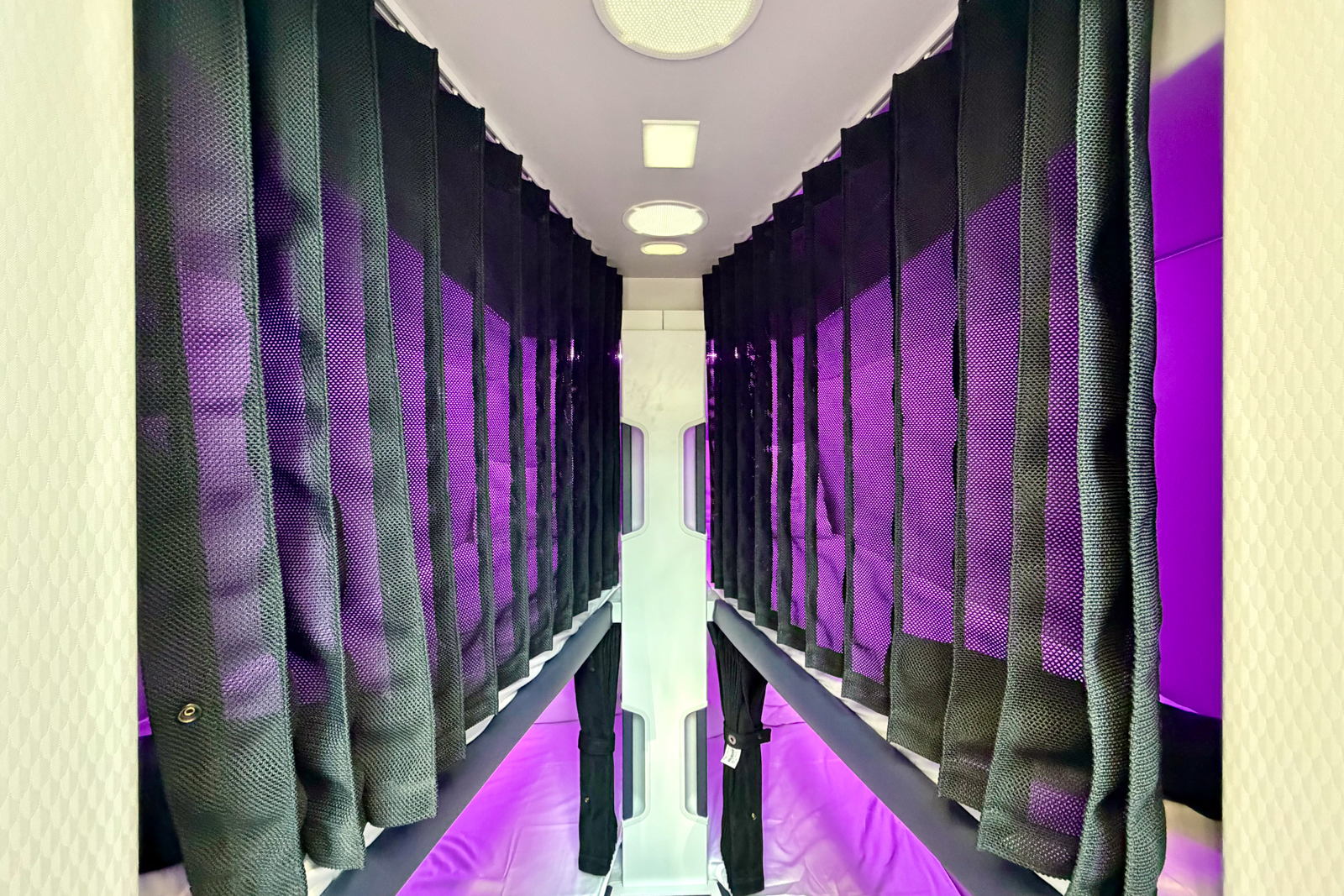
There is mood lighting that gradually brightens when it’s time to wake up.
How to book a Skynest
Air New Zealand will offer two four-hour sessions per flight: one after the first meal service, one before the second. That means 12 bookable slots across the six pods on any given flight.
It’s priced at $495 per session and is available to any eligible economy or premium economy passenger. You’re capped at one session per flight.
The Skynest goes on sale on May 18, with the first flights departing in November on the New York to Auckland route.
Only two 787-9s will have the product initially, so expect availability to be tight.
Bottom line
This is probably the most ambitious economy class product any airline has ever introduced.
It’s not perfect. Getting in and out is awkward, the pods are narrow, and $495 isn’t cheap on top of an economy ticket.
But Air New Zealand deserves credit for trying something genuinely new in a cabin where innovation is basically nonexistent.
Personally, I’d pay for it on a 17-hour redeye to New Zealand (though I’d still prefer sleeping in business). The question is whether enough other passengers will, too.
Subscribe to the newsletter
Get the front-row look at the evolving world of travel, loyalty, tech and lifestyle — delivered directly to your inbox.


Thanks for the details. I read on another blog that the reservations were for 4 hours. To me that makes no sense as the flight will likely be 18+ hours. Why not allow for 6-7 hours each round? That would still allow for plenty of time for the plane to reach cruising altitude before the first round, change linens before the next, then have the second session end well before descent begins.