




In this post Show
Editorial Disclosure
Free inflight Wi-Fi is all the rage right now.
Nearly every major U.S. airline is offering some version of free internet, and many more planes are coming online in the next few years.
For travelers, this sounds like an easy win. But not all “free Wi-Fi” is created equally.
Here’s what I mean.
Related: American Airlines finally rolls out free Wi-Fi — but there’s a catch
2 types of inflight Wi-Fi
At a high level, free inflight Wi-Fi in the U.S. is dominated by two providers: Viasat and Starlink.
American, Delta, and JetBlue primarily rely on Viasat. Alaska, Hawaiian, and United are betting on Starlink.
Southwest sits somewhere in the middle, using a mix of Viasat and Anuvu — the latter of which can be hit-or-miss at best.
While both Viasat and Starlink deliver internet via satellite, they’re built on fundamentally different architectures.
Starlink connects to low-earth orbit (LEO) satellites. These satellites sit much closer to the ground, which translates to lower latency and faster speeds.
Viasat relies on geostationary satellites positioned farther from Earth. While the system still delivers solid performance, you’ll experience much more buffering with streaming, video calls, and gaming.
Starlink also offers broader global coverage, which is particularly important for long-haul and overwater routes.

For instance, Viasat doesn’t currently offer service on transpacific routes to Asia.
Why airlines rushed to offer free Wi-Fi
When Delta joined JetBlue in offering free inflight Wi-Fi in 2023, the dominoes quickly started to fall.
Other U.S. airlines (and many international ones) raced to announce their own plans to go free.

Subscribe to the newsletter
Get the front-row look at the evolving world of travel, loyalty, tech and lifestyle — delivered directly to your inbox.
But free Wi-Fi isn’t something airlines can activate overnight.
To support hundreds of connected devices at once, planes need upgraded antennas and satellite hardware that’s both costly and takes planes out of revenue service.
It took Delta years to make good on its free Wi-Fi promise. It needed to retrofit aircraft with Viasat to enable free access.
American finally gave in to the free Wi-Fi trend this year, it technically could’ve been among the first to announce or offer it.
Nearly its entire mainline domestic fleet was already equipped with Viasat hardware capable of supporting free Wi-Fi with a few small software tweaks.
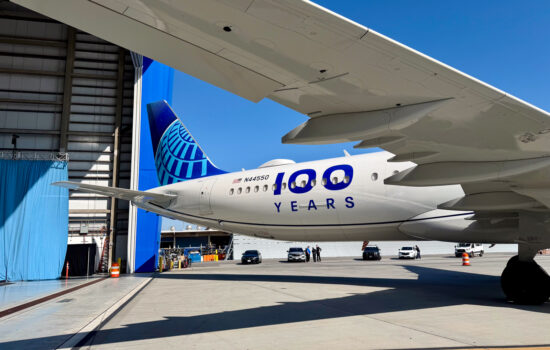
Meanwhile, Alaska and United are still in the throes of installing Starlink, a newer system that still needs FAA certification for each new aircraft type.
The onboard experience matters most
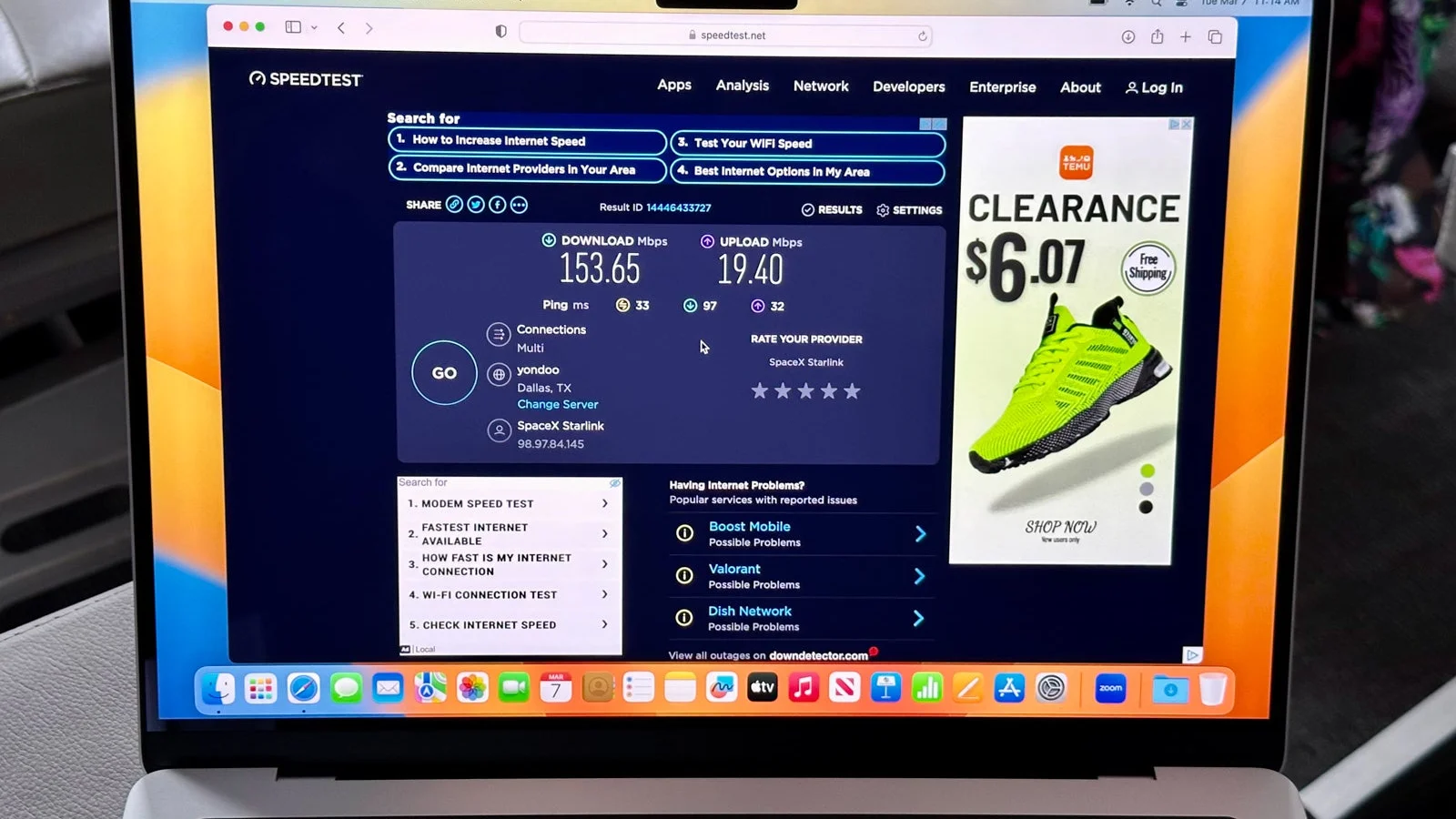
If you’ve flown on both Viasat- and Starlink-equipped aircraft, the difference is pretty apparent.
Starlink tends to feel faster and more responsive, with far less buffering or slowdowns as the cabin fills up.
On many recent Viasat-equipped flights (especially now that Wi-Fi is free), performance hasn’t been as strong as it was back when passengers had to pay.
That’s partly because more people are online, but it’s also a structural limitation: each plane has a fixed amount of bandwidth to share.
A long-term play
One of Viasat’s biggest advantages is that it’s already flying on hundreds of aircraft. But in the long run, Starlink looks like the better bet.
As more aircraft are equipped and certifications are finalized, airlines that choose Starlink are already offering a superior inflight internet experience.
Sure, it’s frustrating that Alaska and United still generally offer slower and more expensive Wi-Fi than their competitors.
But in the long run, the faster speeds, lower latency, and better reliability of Starlink should matter more than whether Wi-Fi became free a year earlier.
Subscribe to the newsletter
Get the front-row look at the evolving world of travel, loyalty, tech and lifestyle — delivered directly to your inbox.




We flew business class on Air France from Paris to Phoenix and their wifi worked extremely well and I believe Starlink provides it. Usually I expect wifi to be bad but when I tested it and used it during the second half of the flight it was solid.
Sounds like Starlink on Air France
Don’t forget about Amazon’s upcoming player in this space with commitments from players like JetBlue! LEO is the future of airline wifi without a doubt.
I lucked onto a UA flight with Starlink one morning and the quality completely blew my mind–it’s not even a comparison between Viasat and these LEO providers.
Ah, yeah great call! Had it on my mind, but things have been quiet on that front for a while. But basically, the argument still holds. It’s LEO or bust in the future