



In this post Show
Editorial Disclosure
Delta Air Lines’ next hub will almost certainly be in Austin, Texas.
The airline just announced its first-ever nonstops from Austin to Paris, launching March 27, 2027, and running daily through Oct. 24.
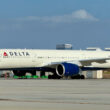
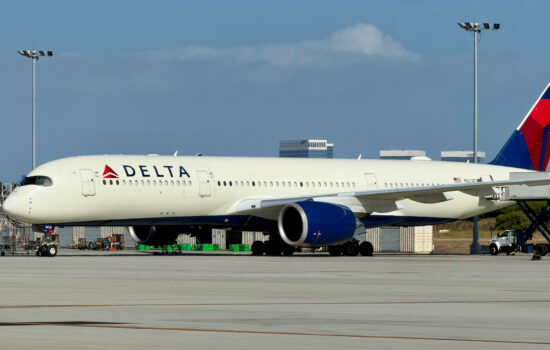
Better yet, Delta will deploy the Airbus A330-900neo on the route, which sports its top-notch Delta One Suites cabin.
Adding a long-haul route that doesn’t touch a hub is rare for Delta. (There are only three others: Cincinnati to Paris, Orlando to Amsterdam, and Tampa to Amsterdam.)
But this one is different.
It’s the latest in a string of investments in a city that’s gearing up to become Delta’s next hub.
Austin ‘can be’ Delta’s next hub
Delta celebrated the announcement at the Commodore Perry Estate, an Auberge Resorts Collection property, and the closest thing the airline could find to a French villa in Texas.

There, Delta’s chief commercial officer, Joe Esposito, told me that “I think Austin can be our next hub.”
Delta is currently selling 65 flights a day from Austin, and that number jumps to 71 in March, according to Esposito. He drew a parallel to how the airline grew Boston, New York, and Los Angeles into hubs.
Start by catering to the local community (Delta now serves 17 of the top 20 destinations from Austin), add connecting flows (connecting traffic is growing), then top it off with international service (Cancun, Los Cabos, and soon Paris).
“At some point, I guess you turn into a hub when you get enough critical mass,” Esposito explained.
Filling a Texas-sized hole in Delta’s network
Austin has been a Delta focus city since 2018.
Before the pandemic, Delta had focus cities in five markets: Austin, Cincinnati, Nashville, Raleigh-Durham, and San Jose, California.

Subscribe to the newsletter
Get the front-row look at the evolving world of travel, loyalty, tech and lifestyle — delivered directly to your inbox.
But only two survived: Austin and Raleigh-Durham.

And between them, hubbing Austin makes far more sense than Raleigh, which sits roughly 350 miles from Delta’s mega-hub in Atlanta.
Turning Austin into a hub would plug Delta into one of the fastest-growing states in the country.
“It’s great to have a Texas position,” Esposito said, “and it marries up very nicely with the product we bring to Austin. I think we have the best-in-class product amongst anybody.”
Delta’s hub won’t come until the 2030s
Austin-Bergstrom International Airport (AUS) is in the middle of a transformation.
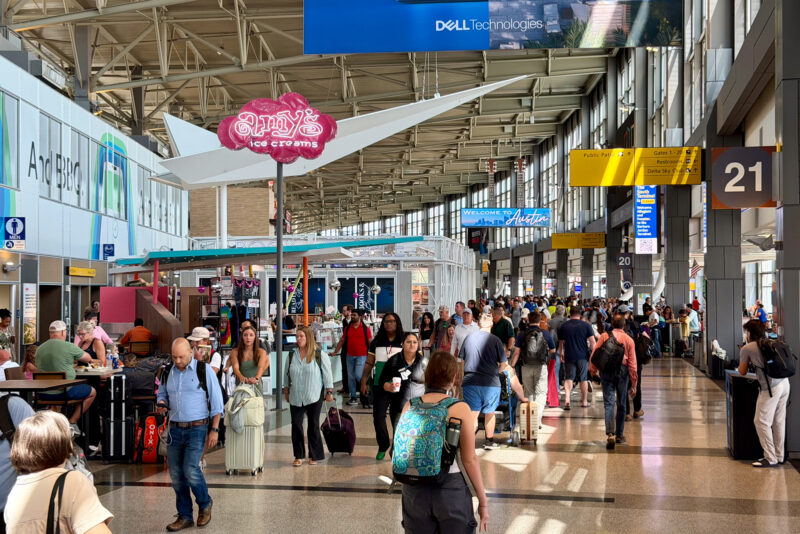
The existing Barbara Jordan terminal is bursting at the seams. (On the busiest days, arriving planes sit on the tarmac in lengthy holds waiting for a gate.)
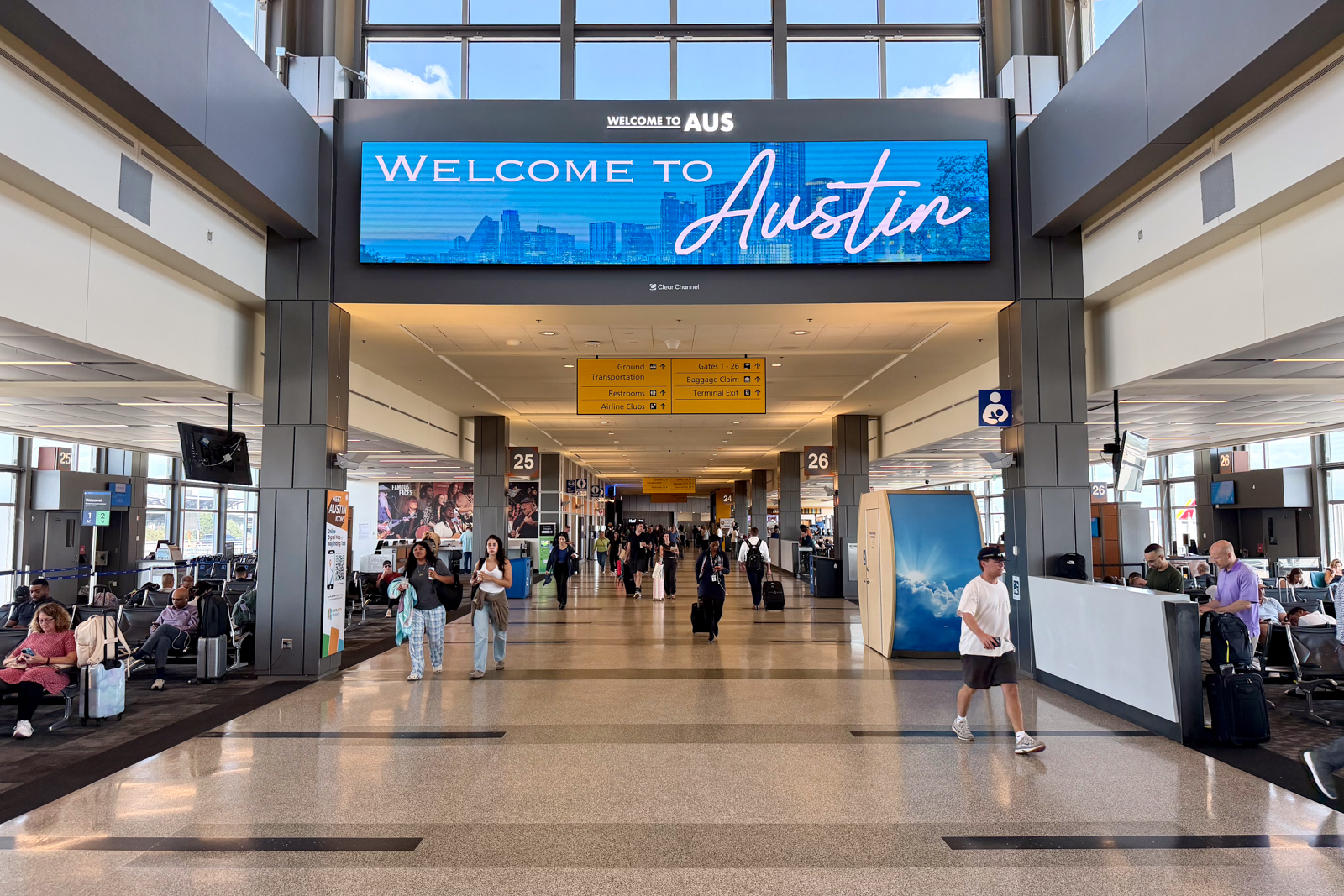
The airport is spending $5 billion on a total overhaul, including a new 26-gate Concourse B that isn’t due until the early 2030s. When it opens, Delta will claim 15 gates in the existing concourse, build a second, larger Sky Club (no word yet on a Delta One Lounge), and likely add more flights.
Delta is coming after Southwest’s lead
Southwest is the largest carrier in Austin today, operating roughly twice as many flights as Delta, according to Cirium schedules.
Delta wants to close that gap.
The two airlines ran on distinctly different business models for years, but Southwest has since made seismic changes to its commercial strategy that resemble what Delta has been doing all along.
In fact, Austin is reportedly a contender for one of Southwest’s first airport lounges.
“Southwest is a great airline,” Esposito said. “But I think we’re the best fit for Austin personally for the products that we put out [to this market].”
Subscribe to the newsletter
Get the front-row look at the evolving world of travel, loyalty, tech and lifestyle — delivered directly to your inbox.


Comments Disclosure
Responses are not provided by or commissioned by any bank advertisers. Responses have not been reviewed , approved, or endorsed by any bank advertisers. It is not the responsibility of the bank advertiser to respond to comments.