





In this post Show
Editorial Disclosure
The European Union’s new Entry/Exit System (EES) replaces traditional passport stamps with a digital system for border crossings at member airports.
EES officially launched on April 10, and the rollout has been far from seamless.
Some travelers have reported hours-long waits, and the European airport chief even recently admitted that countries should “stop pretending” that EES is working.
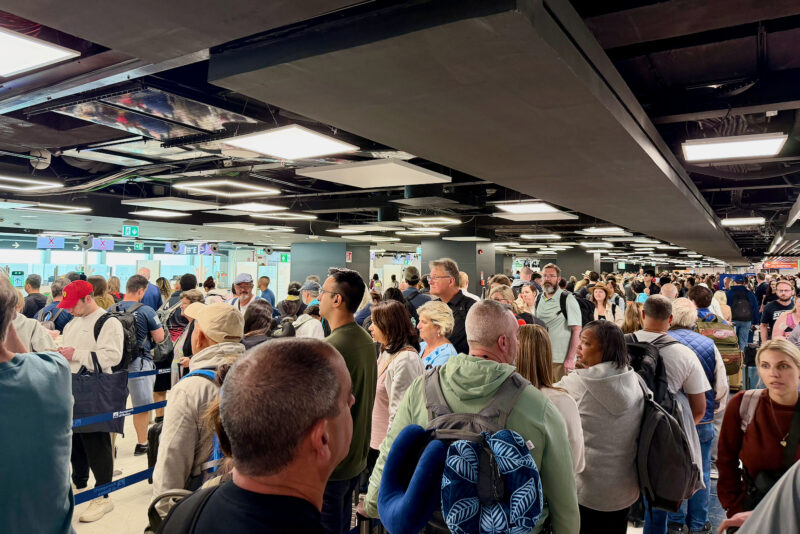
Personally, I’ve used EES eight times since it launched, and it was just as inconsistent as the headlines suggested. On my most recent visit, immigration lines stretched more than two hours leaving Paris.
Here’s everything you need to know about EES, what my experiences using it were actually like, and how to beat the system on both ends of your trip.
Predicting EES crowds
EES lines swing wildly depending on when you land or depart.
So I built a tool to estimate your wait.
I pulled the full flight schedules for the 31 biggest EES airports, stripped out the intra-Europe flights that skip EES, and mapped how busy each border runs hour by hour — by airport, day of the week, and for both arrivals and departures.
Just a fair warning: this tool forecasts how busy a border could be. It’s not a live wait time tool, like the one I built and maintain for TSA checkpoints.
What is EES?
EES is a new digital biometric record of every entry and exit into the EU.
If you’re traveling with a non-EU passport for up to 90 days within any 180-day period, you’ll go through EES at the border.
EES is currently used in the following European countries:
- Austria
- Belgium
- Bulgaria
- Croatia
- Czechia
- Denmark
- Estonia
- Finland
- France
- Germany
- Greece
- Hungary
- Iceland
- Italy
- Latvia
- Liechtenstein
- Lithuania
- Luxembourg
- Malta
- Netherlands
- Norway
- Poland
- Portugal
- Romania
- Slovakia
- Slovenia
- Spain
- Sweden
- Switzerland
Note that the EES system isn’t currently being used in Cyprus and Ireland.
The first time you enter Europe, you’ll register your passport, capture a photo, and provide four fingerprints. This registration is good for three years.
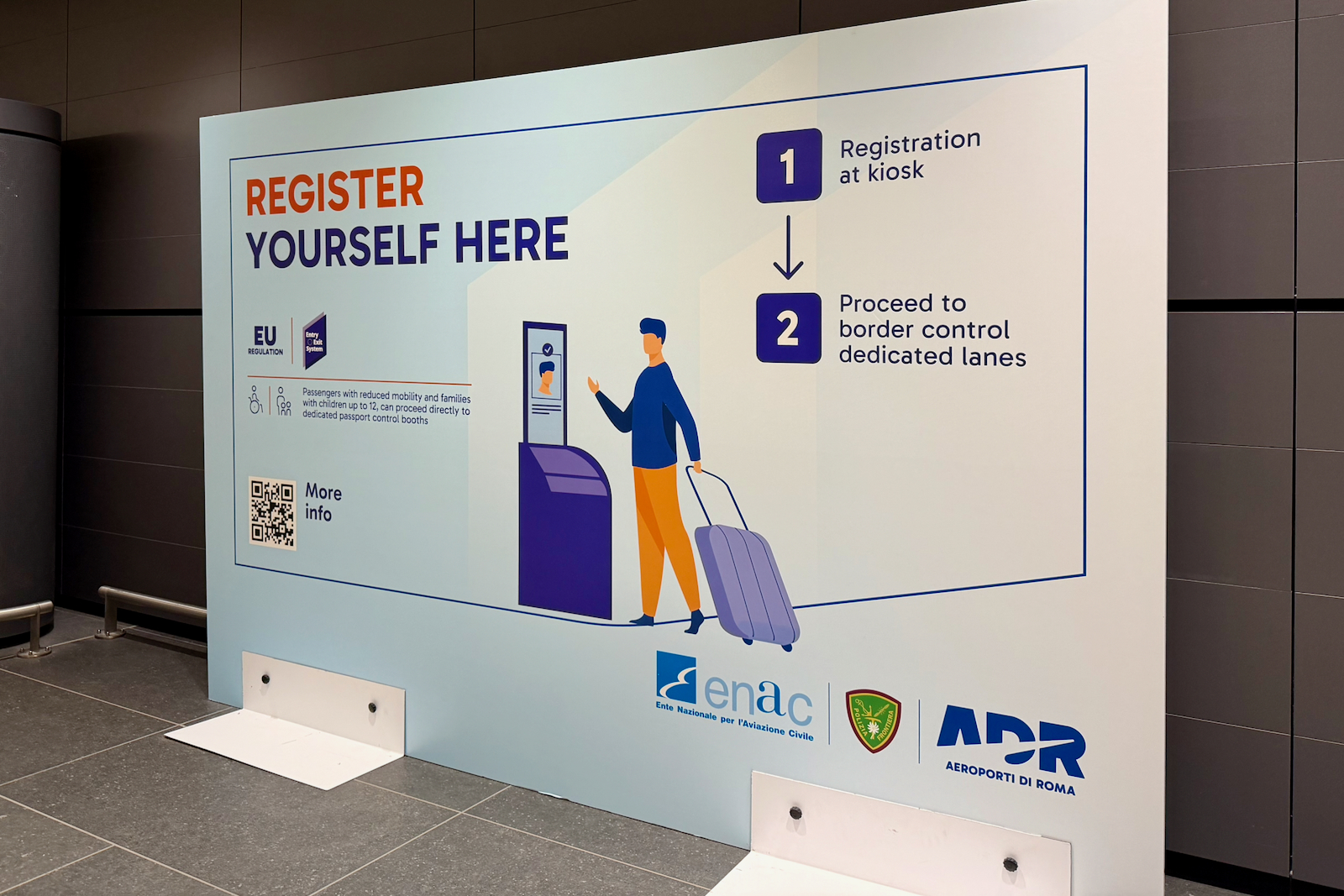
On subsequent visits, the system is supposed to verify your stored biometrics with no re-registration required. Some airports, however, will still require you to complete the preregistration process again on subsequent visits. More on that below.
EES is separate from the European Travel Information and Authorization System (ETIAS), which is expected to launch in the coming months.
This will become the new pre-travel approval that visa-exempt travelers (including Americans) must obtain before flying.
What my EES experience was actually like
Arriving in Italy
I’ve now experienced the new European immigration system eight times.
On the first two trips, I was traveling to Italy — once to Rome on the Alaska Airlines inaugural flight and the second time to Milan on Emirates’ fifth-freedom route from New York.
On arrival at both Rome Fiumicino Leonardo da Vinci Airport (FCO) and Milan Malpensa Airport (MXP), the process consists of two parts.
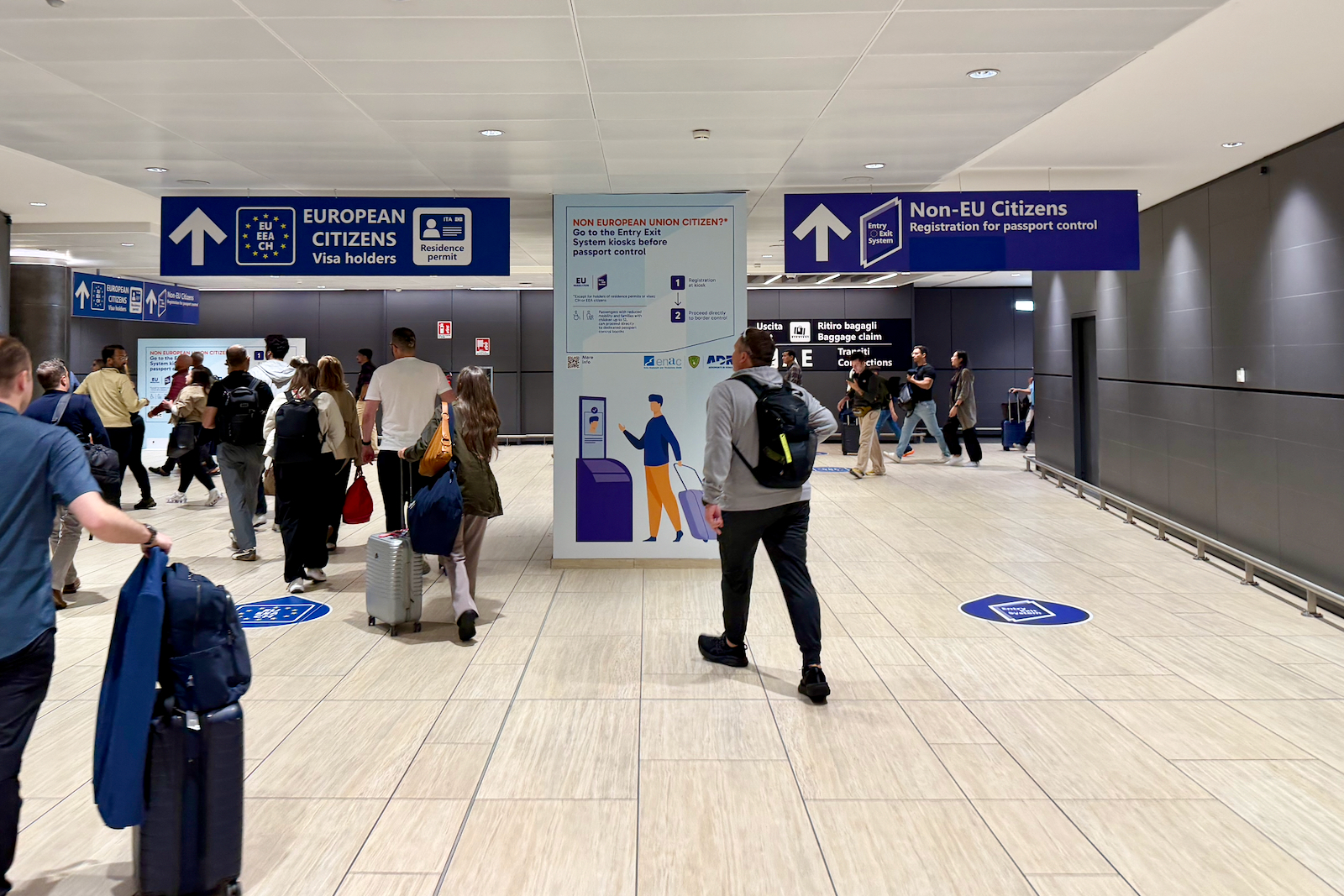
First, you register at a self-service kiosk with a passport scan, a photo, and four fingerprints. There were plenty of open kiosks at both airports, and the whole thing took me under five minutes.
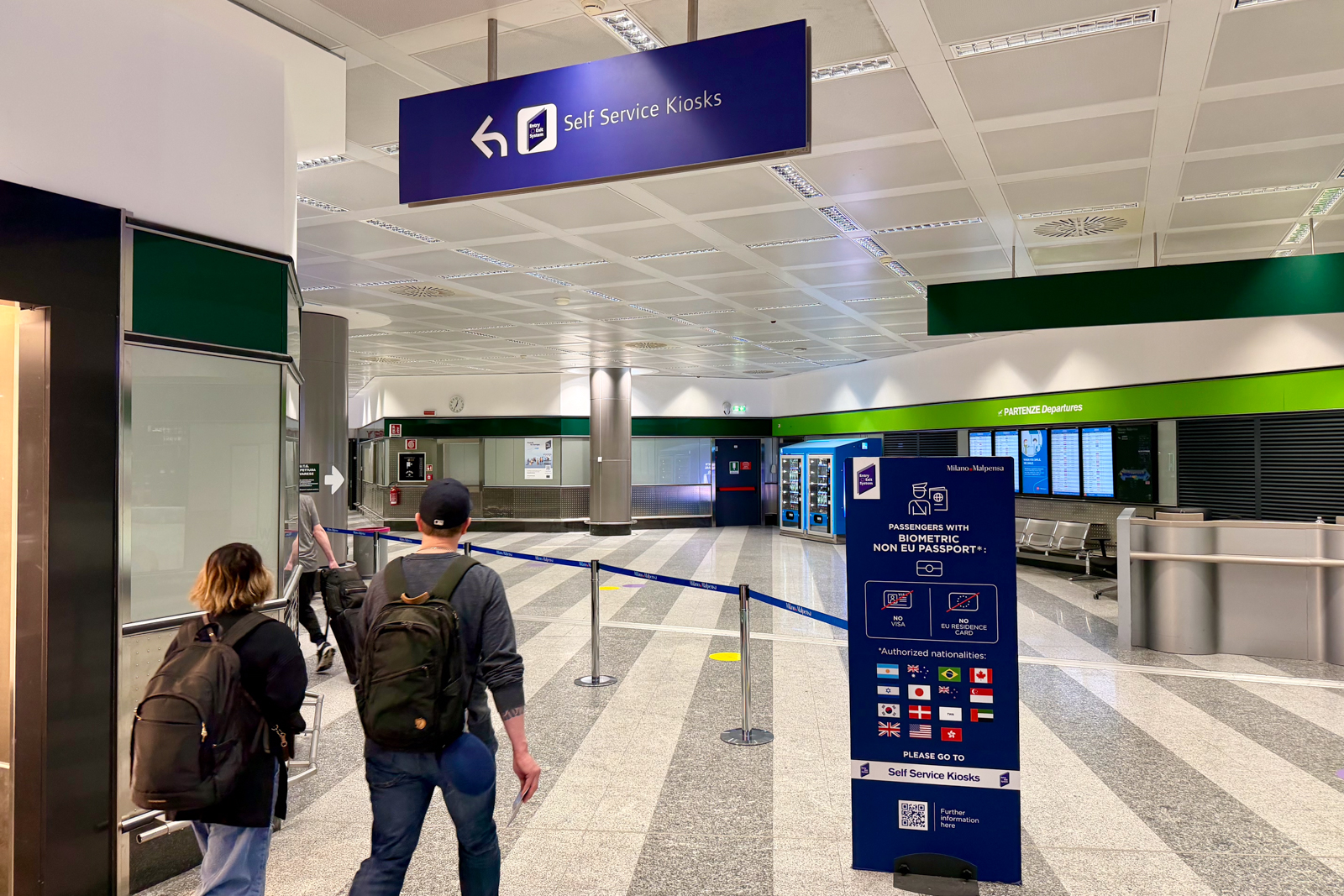
Note that you can’t go straight to the immigration lane. You must complete the registration process. I saw plenty of people try to skip this step and then get sent to the back of the line.
Interestingly, in Milan, the registration kiosk asked me about the purpose of my stay, how much cash I was traveling with, and when I plan to leave.
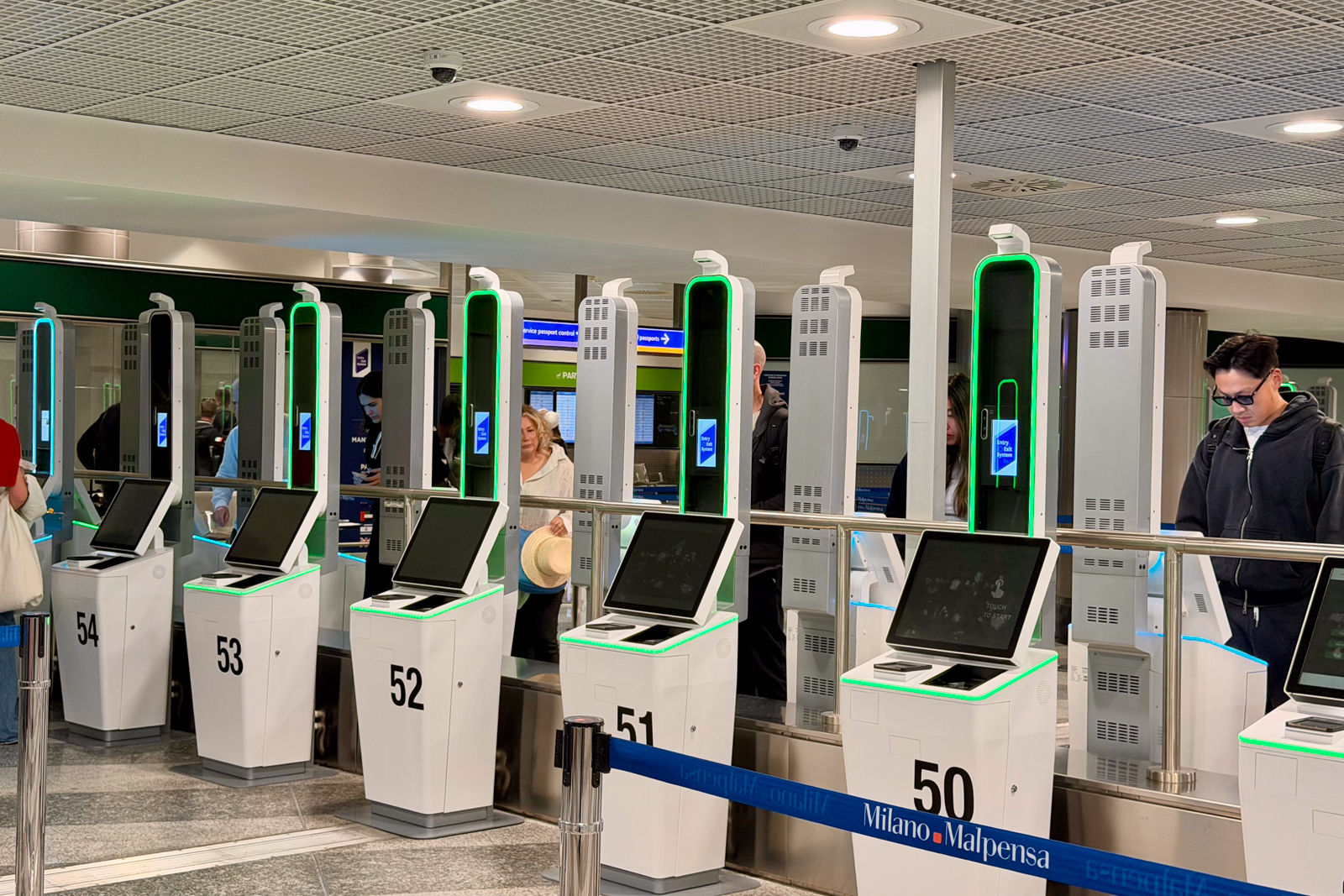
That’s probably why I was told that I needed to complete this step, even though my biometrics were already stored from my first visit.
I received no such questions on arrival in Rome.
(Note that Sweden and Portugal let you complete a portion of the registration process before you land in Europe using the Travel to Europe app.)
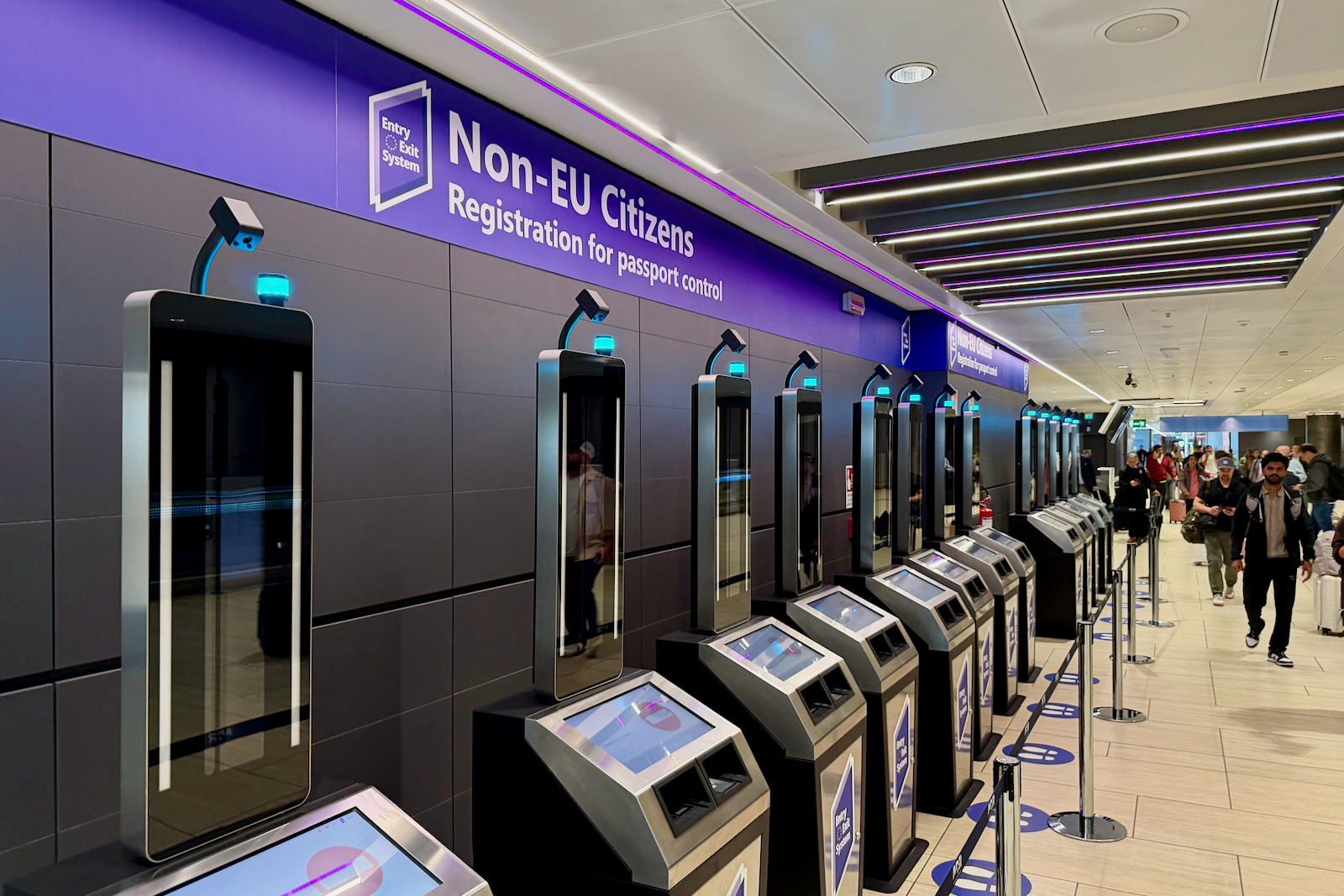
Once registered, you head to the eGate immigration line for non-EU passports.
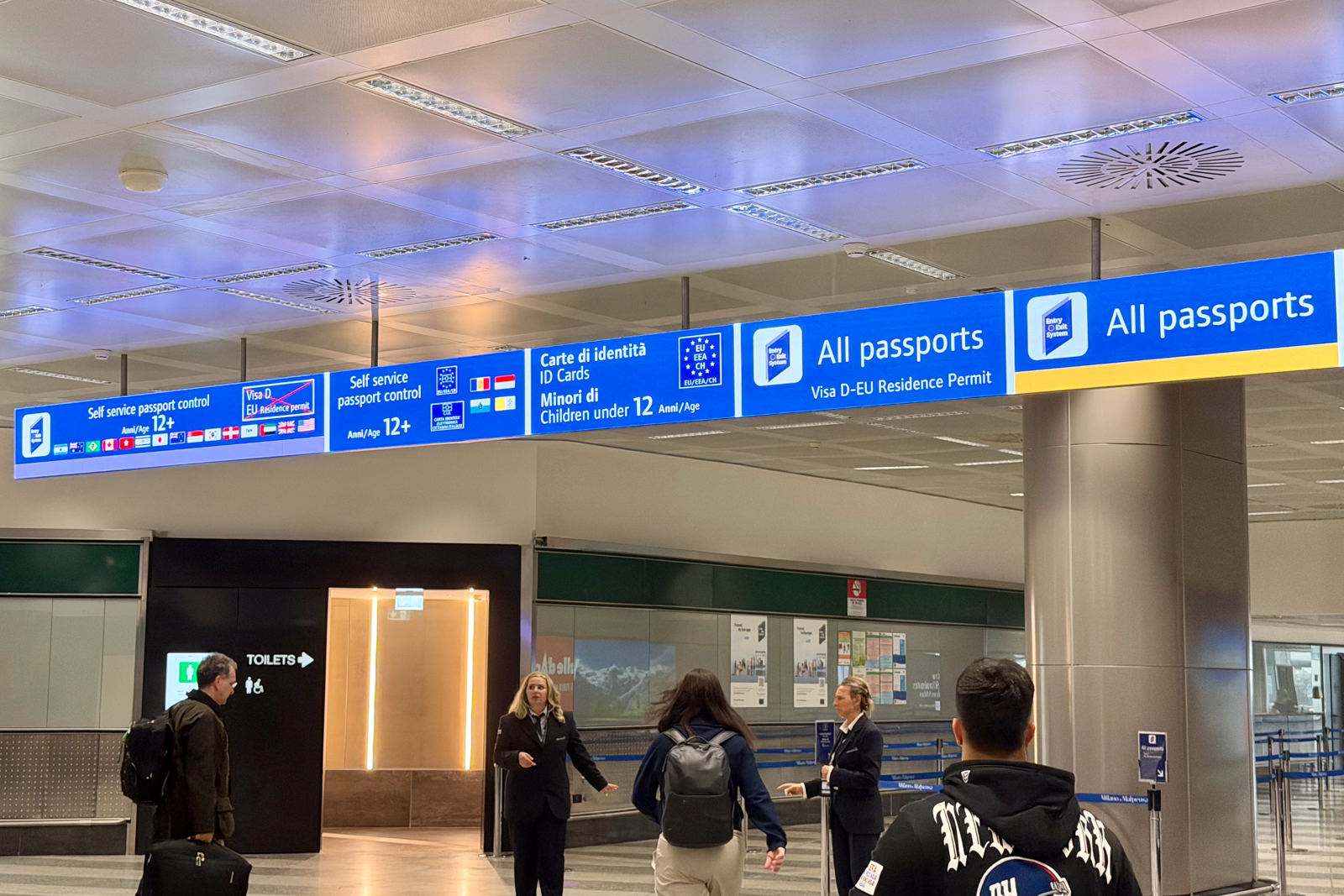
Don’t get in the wrong lane — I watched plenty of people make that mistake in both airports.
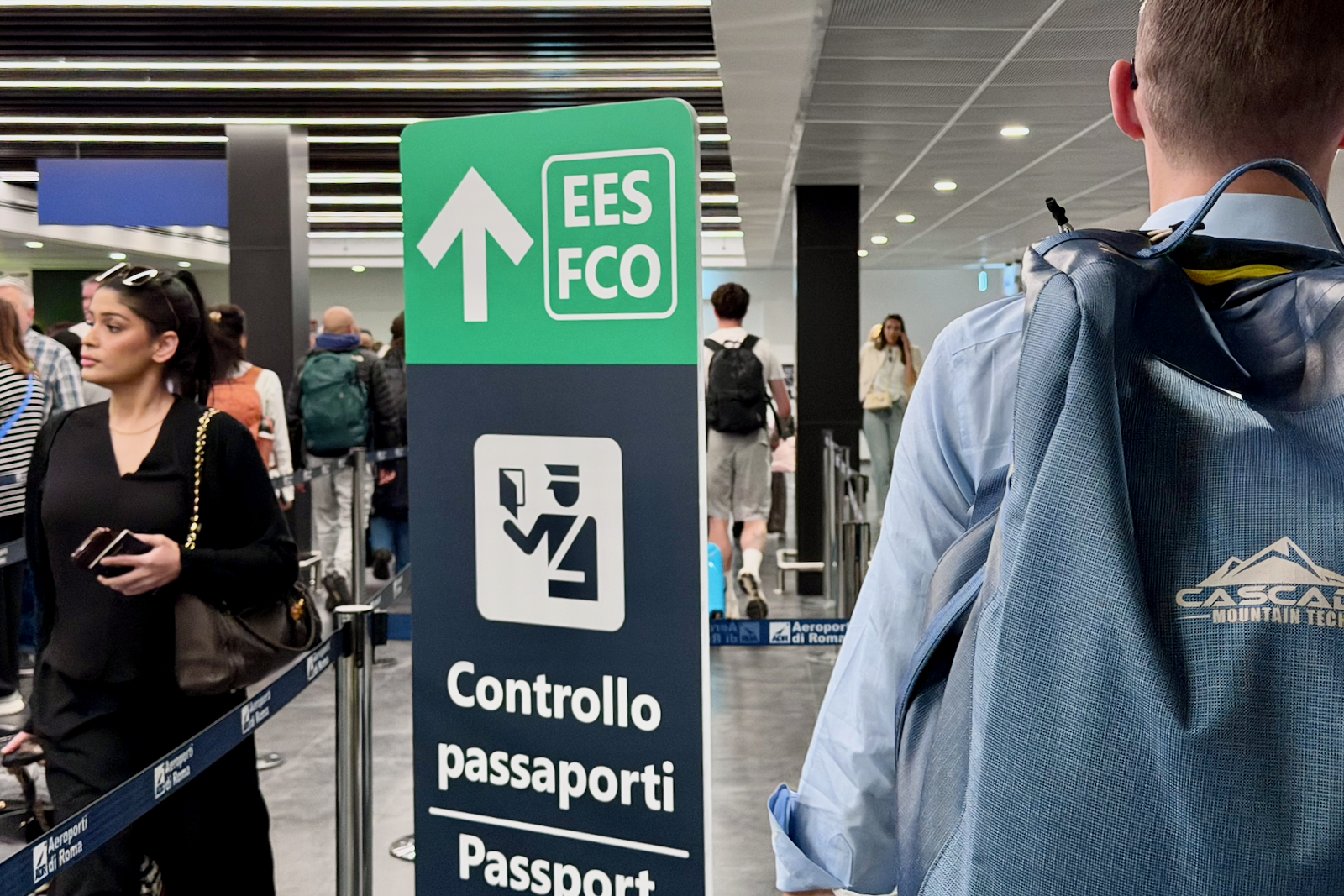
From there, I waited about ten minutes for my turn at the gate in Rome, and about 20 minutes in Milan.

Subscribe to the newsletter
Get the front-row look at the evolving world of travel, loyalty, tech and lifestyle — delivered directly to your inbox.
Arriving in France
On two other visits, I landed in Paris-Charles de Gaulle Airport (CDG).
Both times, the immigration authorities had turned off the formal EES process, likely to help keep the line moving faster.
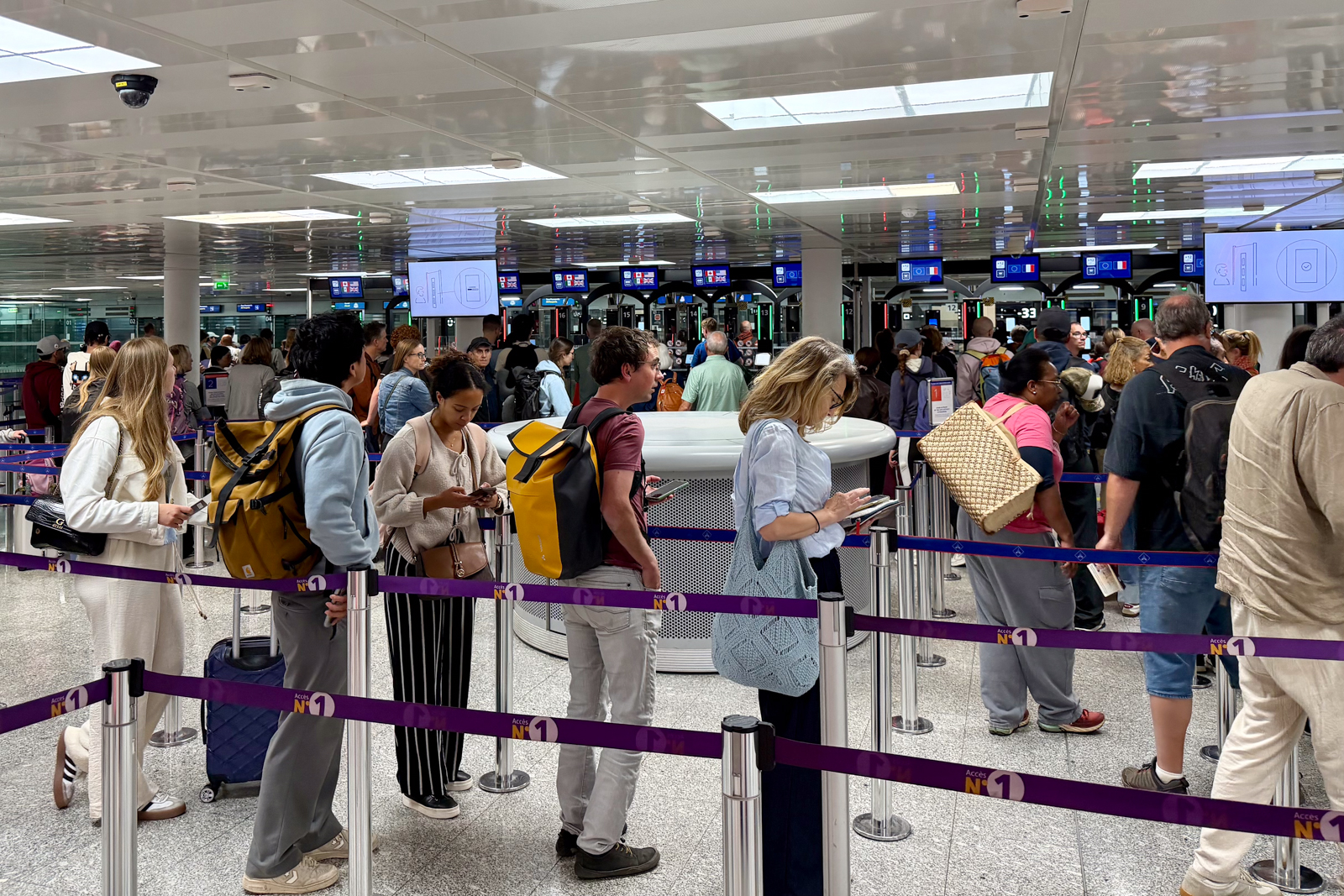
Instead of needing to preregister, I went straight to the Parafe eGate lane, which U.S. passport holders can use when entering or exiting France.
The lines in both cases took about 30 minutes, and note that if you have Sky Priority from flying in business class or eligible status, you’ll receive fast-track through immigration in Paris.
Departing Italy
On departure from Rome, I cleared the exit process at FCO in roughly 15 minutes.
Most of the holdup was due to a long line for the eGates. I’d estimate that 30% of travelers didn’t know how to use the kiosks.
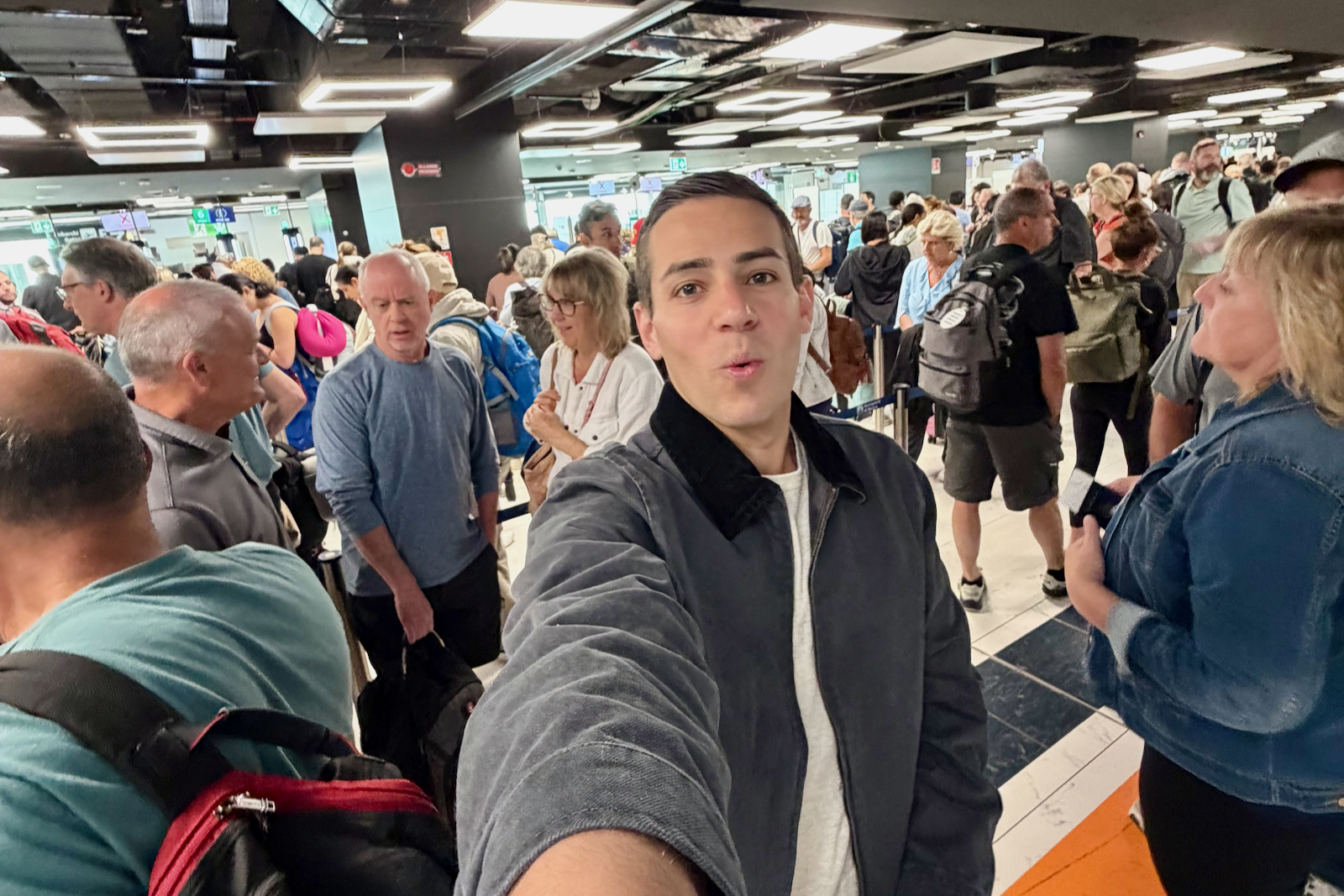
Plus, the usual peak-departure crush didn’t help either.
Departing France
Leaving Europe the second time with EES was a little different.
Firstly, my last point of departure from the EU was Paris. (I had connected within Europe to get to Paris, but you don’t need to do anything with EES until your last point of departure from Europe.)
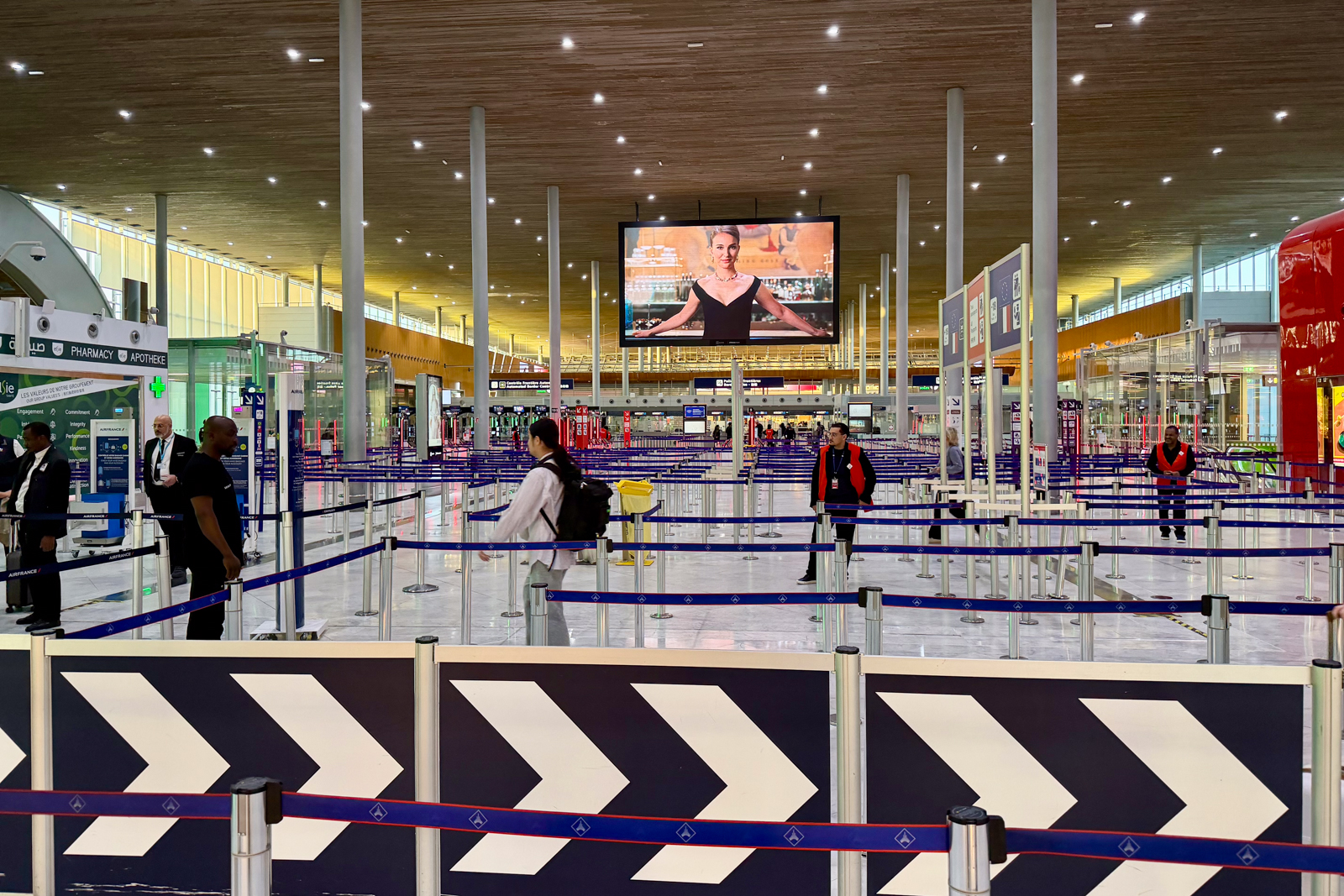
I specifically chose the first flight of the day from Paris to New York to avoid long EES lines, and that move paid off big time.
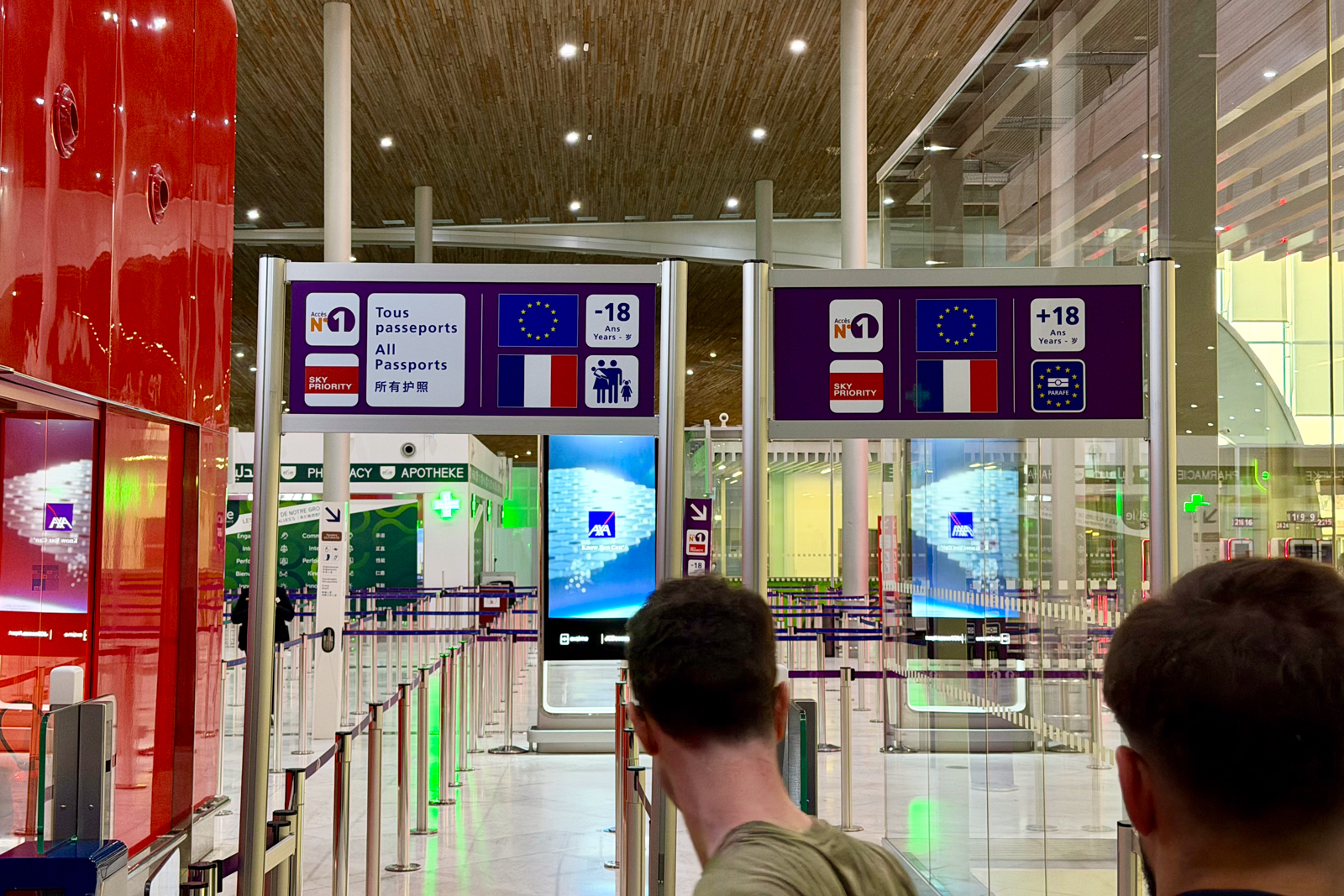
There was no one in the immigration line at Terminal 2E at Paris-Charles de Gaulle Airport (CDG) when I arrived at 6:15 a.m.
I went straight to the eGate, inserted my passport, and took a quick picture. I was on my way in under five minutes.
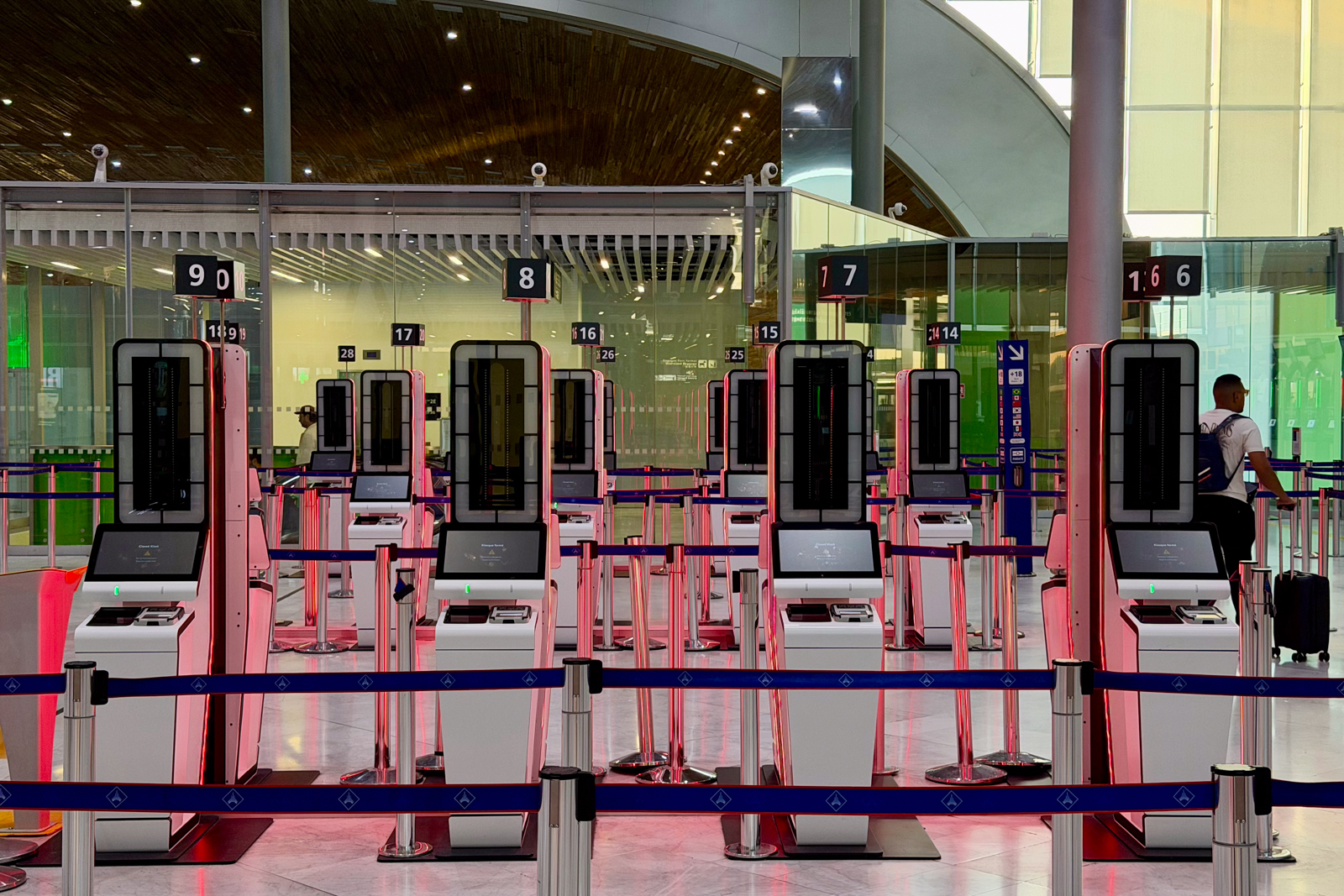
The bad news is that on my subsequent departure from Paris, I witnessed the longest immigration line I’ve ever seen: two hours of snaking around the terminal.
I heard many concerned travelers uttering expletives because they were worried about missing their flights.

Chaos would be the best way to describe the situation. CDG does offer a priority EES lane for families and travelers with Sky Priority. To find it, follow the signs for “crew” in Terminal 2E.
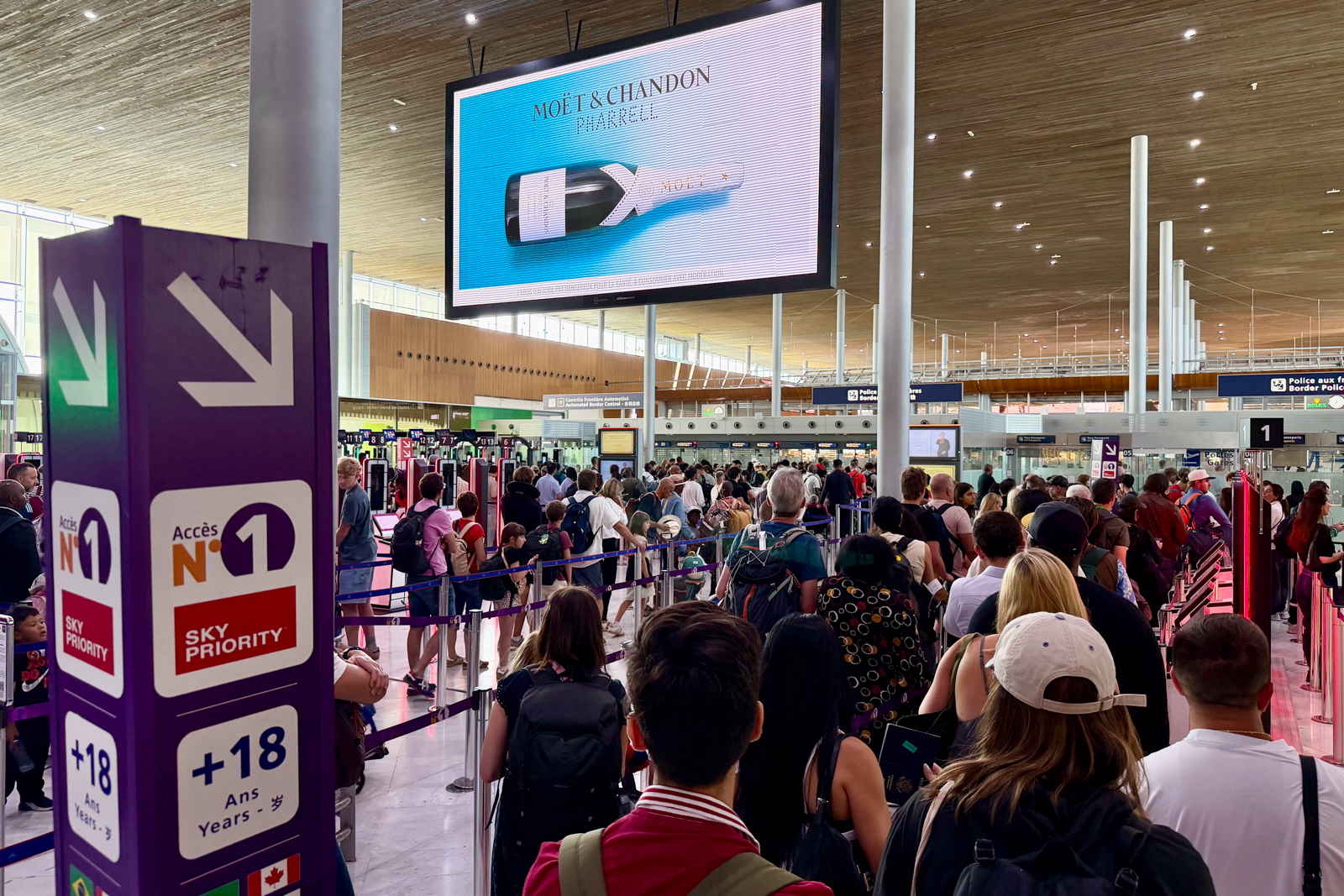
Thankfully, I was flying in business class, and I was through in “only” 40 minutes.
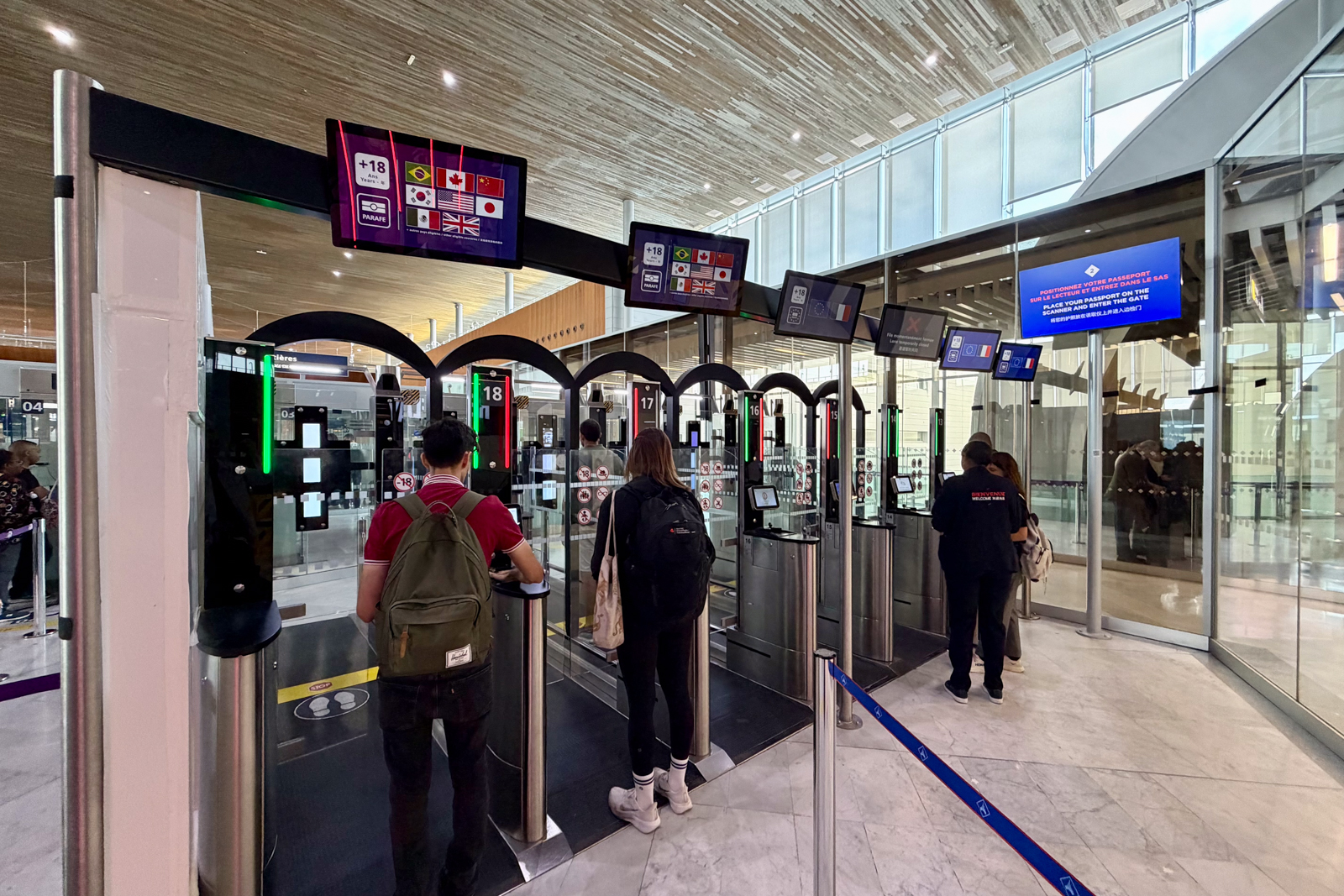
Immigration authorities had turned off the formal EES process during this visit due to the crowding.
How to beat EES on arrival
Entering Europe is where most of the viral videos have been filmed. It’s not always as bad as advertised, but a few simple tips can save you a lot of time.
- Know the two-step process. If you’re entering Europe for the first time since EES launched, register at a self-service kiosk first. Then, line up at the eGate immigration line. Don’t head straight for the eGates if you haven’t registered yet.
- Pre-register with the Travel to Europe app if it’s available for your arrival country. The app lets you submit basic arrival details and provides a QR code to speed up the registration upon arrival. Note that you will still need to wait in line at the eGates even after using the app.
- Avoid peak arrival windows. Most transatlantic flights arrive at major European hubs in the mid-morning. I’d avoid arriving during this time to avoid longer lines. (Both of my experiences with EES were during non-peak arrival windows.)
- Remove your passport from any cases.
- Passengers with reduced mobility and families with children under 12 can skip the registration process and head straight to passport control and use the priority lane.
- Be prepared for last-minute changes. Some of the largest airports have been turning off EES during peak times. Be prepared for manual checks in this case. (My wife recently flew to Amsterdam and had the standard EES experience on arrival, but the machines were turned off during her departure.)
How to beat EES on departure
The exit process trips up more people than you’d expect. A few things that will save you time at the eGate:
- You’ll pass through EES at your last airport within the Schengen Area. So if you’re connecting before your long-haul flight, you won’t need to worry about EES until your final airport in Europe.
- Place your passport on the scanner with the information page facing down.
- Wait for the machine to finish reading before removing your passport.
- Don’t push the gate or call for help. If there’s a person in the vestibule ahead of you, the gates won’t open until they’re through.
- Step up to the camera when the gates open. You’ll get a photo taken, and in some cases, your fingerprints will be collected too.
- Note that some airports offer a priority line for families, elite members, and business-class travelers. Use those lanes if you’re eligible.
- Avoid peak departure windows if possible. Early-morning or late-evening flights will be your best bet.
Frequently asked questions about EES
Does EES apply to arrivals and departures?
Yes, it does. The EES line estimator tool distinguishes between entering and exiting Europe.
Which airport is best? Or worst?
It really depends on when you arrive and depart. The line estimator tool above shows when your airport will be busiest. Anecdotally, I’ve received the most complaints about lines in Amsterdam, Athens, Lisbon, and Madrid.
When do you clear EES?
You’ll clear EES at your first point of entry into the Schengen Area, even if you have connecting flights within Europe. When you leave Europe, you’ll pass through EES at your last airport within the Schengen Area.
Does EES apply to the Eurostar trains to/from London?
Yes, you will clear EES if you’re traveling by train. The lines haven’t been terrible, but I’d suggest arriving at the station at the recommended time written on your ticket.
Bottom line
EES is the new normal for any American traveling to Europe, and the early rollout hasn’t been without hiccups.
If you can, avoid arriving during peak transatlantic bank hours. And if you’re heading to Sweden or Portugal, take a few minutes to pre-register on the Travel to Europe app before you fly.
Otherwise, knowing how the system works before you step off the jet bridge is the single best way to save yourself time and frustration.
Subscribe to the newsletter
Get the front-row look at the evolving world of travel, loyalty, tech and lifestyle — delivered directly to your inbox.





I was in Madrid last week and this week and the system was rejecting almost everyone who tried to use the machines – massive joke and waste of time. Both coming into Spain and leaving was a disaster
I arrived in Madrid on 5/22 and most of the scanners weren’t accepting people’s passports and there was very little help and luckily I know enough Spanish to figure out what I was supposed to do. Had to go to the gate agent, but no fingerprints taken. On the way out it was the same story but they did take my fingerprints. I arrived 5 hours early and made it through quickly, but I can see at peak times this will be a disaster.
I was in Milan last week and the system worked well upon arrival but was a disaster leaving the country. The agents seemed clueless and we almost missed our flight even though we gave ourselves an ample amount of time.
Question: If you are able to Pre-register with the Travel to Europe app prior to flying, do you still need to go to the self service Registration kiosk for anything or is that step completely looked after by pre-registering online and therefore you just go directly from the plane to the E-gate? Thanks.
You will need to go the kiosk, but you’ll have a QR code that’ll make this process a bit faster
Frankfurt was a complete zoo last week. The exit line for non-European travelers was 2 hours. Completely ridiculous.
Useful. Thanks.